Serving Downtown Winona

Water Damage Restoration in Downtown Winona, MN

Behind the levee, the water that floods Winona basements comes up from below, not over the wall. We handle both.

What The Winona Levee Protects, And What It Does Not
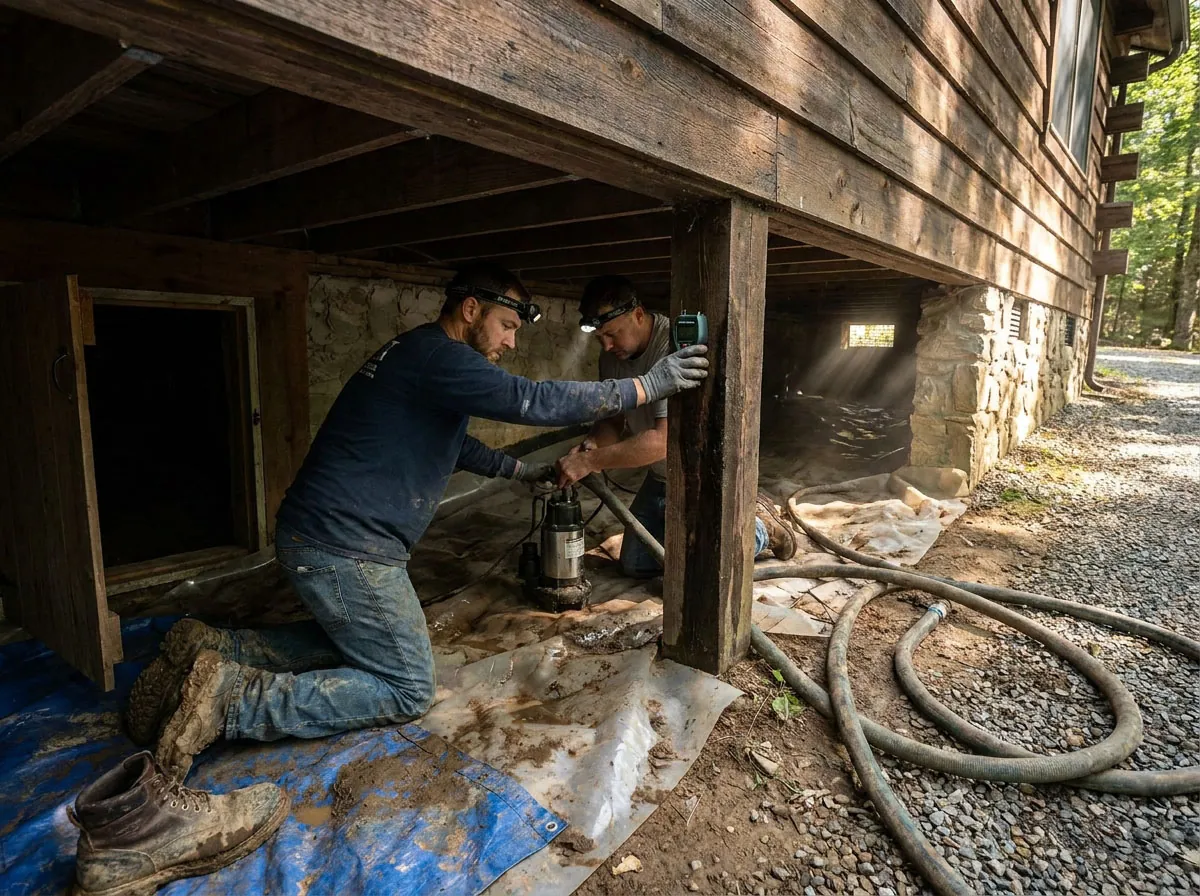
Water damage restoration crew working in Downtown Winona, Minnesota

Downtown Winona sits behind roughly ten miles of sand levee and concrete floodwall, put in through the 1960s and 1980s. It works. When the Mississippi runs high, the water stays on the river side and the city stays dry. Prairie Island floods, Levee Road goes under, and downtown carries on.

That protection creates a false sense of safety. The levee stops river water from coming over the top. It does nothing about the water already underneath your house.

When the river climbs, the water table under the flats climbs with it. Five flood pumps push interior drainage back over the levee, and when the river is high those pumps are working against pressure. Storm sewers slow down. Groundwater rises against basement walls that were never built to hold it back. That is when downtown basements take water, and it is almost never from the direction homeowners expect.

River Stage And What It Means For Your Basement

The gauge that matters is the one at the Winona pumping station. Here is how the readings translate to risk on the flats.

Gauge readingWhat happensBasement risk downtown
9 feetLevee Road goes under waterLow. Worth checking your sump and drain tile now.
13 feetOfficial flood stage at WinonaRising. Groundwater pressure builds against foundation walls.
20 feetThe concrete flood control wall engagesHigh. Interior drainage is slow and sump pumps run continuously.
22 feetWall design height, with two feet of freeboard aboveSevere. Sustained pumping and standing water in low basements.

The record crest at Winona is 20.77 feet, set on 19 April 1965. Most homeowners who lose a basement downtown never see the river at all. They see two inches of water on a finished floor while the Mississippi sits calmly behind a wall six blocks away.

Older Downtown Housing Stock And Where Water Gets In

Much of the housing in Downtown Winona predates the levee by decades. That means limestone and rubble foundations, mortar joints that have been repointed more than once, floor drains tied into clay laterals, and basements finished at some point in the last forty years with framing set straight against masonry.

Those buildings fail in predictable places. Water tracks in at the cove joint where the wall meets the slab. It wicks up through unsealed stone. It backs up through the floor drain when the sanitary line surcharges. In a finished basement, all three routes put water behind drywall where nobody sees it until the smell arrives.

We open those cavities. Moisture behind a finished wall does not dry on its own, and a fan pointed at the carpet does nothing for the bottom sixteen inches of insulation that is already saturated.

How We Handle A Downtown Winona Water Loss

First call is triage. We ask what the water is, where it came from and how long it has been sitting, because a clean supply line failure and a sanitary backup are two different jobs with two different safety protocols.

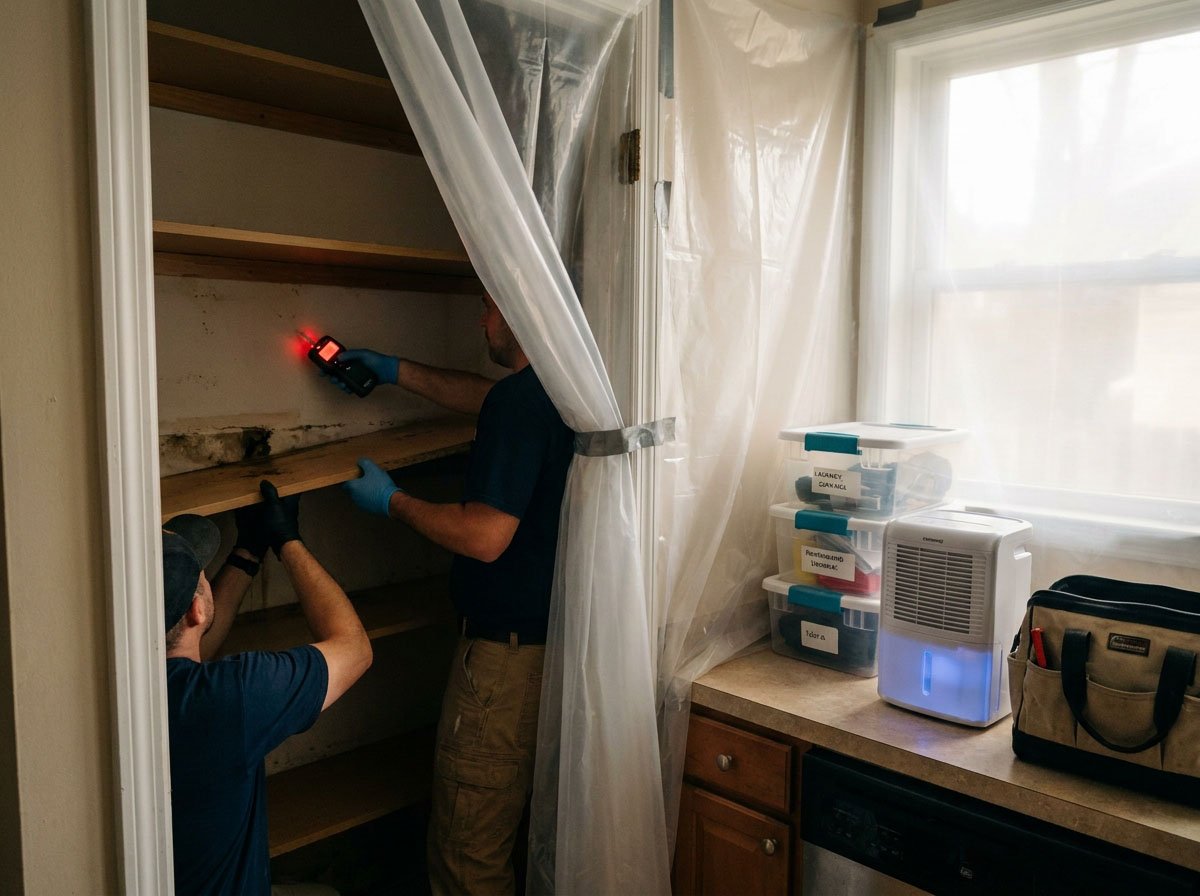
On site, the contractor maps moisture before touching anything. Thermal imaging and pin meters find the wet edge, which in a stone basement is usually further out than the visible water line suggests. That map decides what gets removed and what gets dried in place.

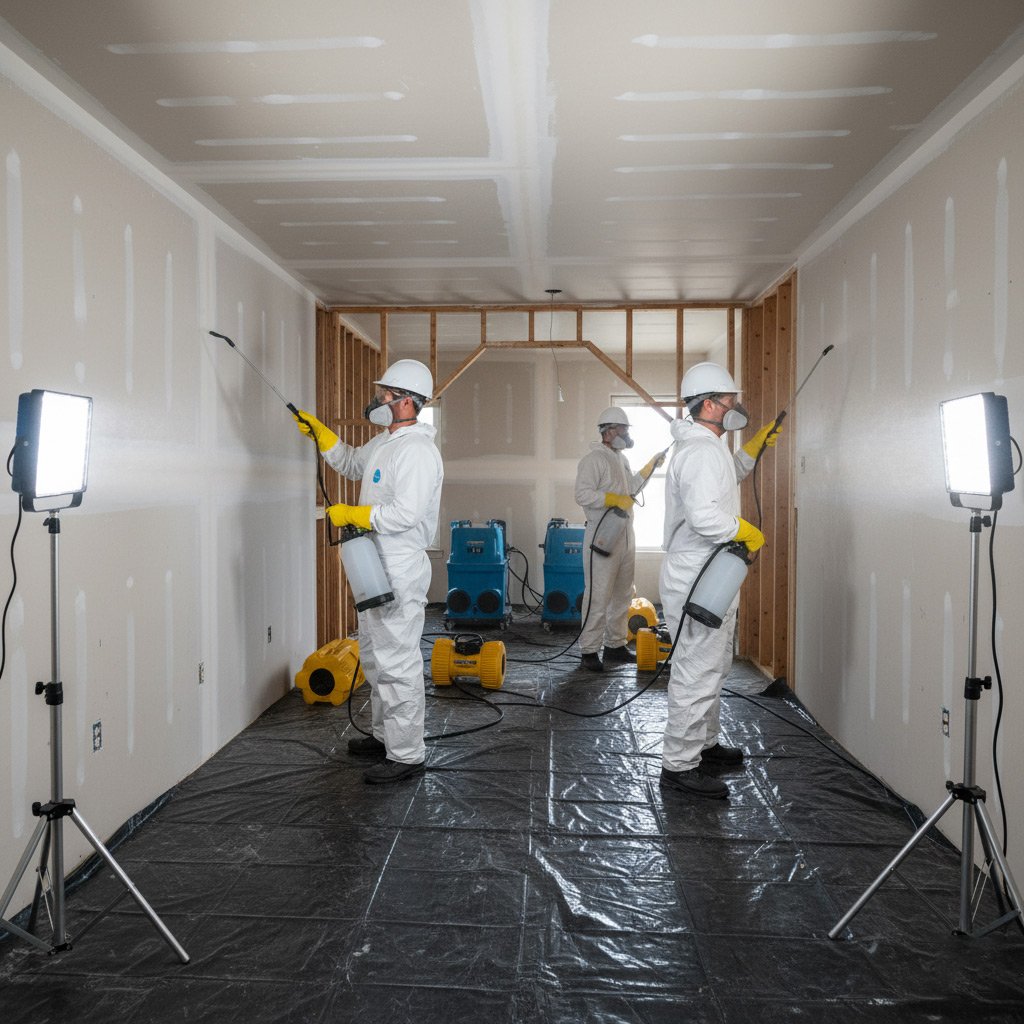
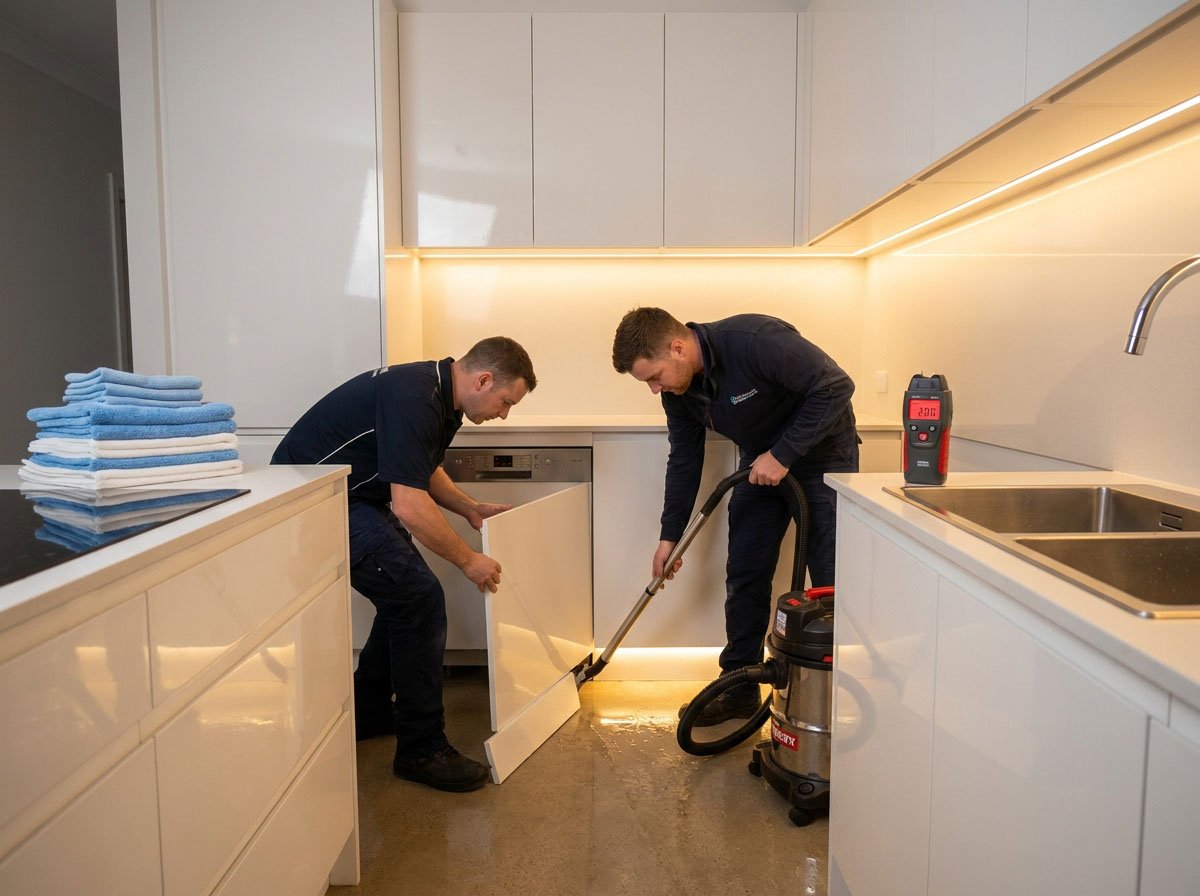
Extraction runs first, then containment, then air movers and dehumidifiers sized to the actual cubic footage. Readings get logged daily against a dry standard taken from an unaffected part of the building. Equipment comes out when the numbers say so, not when the calendar says so.

If the source was a sanitary backup, the affected materials come out rather than getting dried, and the space is cleaned and treated before anything is rebuilt. For that work see our sewage backup cleanup page.

Call (507) 698-9249 and we will route you to a restoration contractor working downtown.

What To Do Before The Contractor Arrives

Shut the water off at the main first. In most downtown houses that valve is on the wall facing the street, often behind the stairs. If the water is coming up through a floor drain rather than out of a pipe, the main will not help and you should skip to the next step.

Kill power to the affected circuits at the panel. Standing water and basement outlets are a bad combination, and in older downtown wiring the basement is frequently on the same circuit as something upstairs.

Then stop. Do not run a shop vac through a sanitary backup, and do not pull up carpet you intend to claim on before it has been photographed. Take pictures of everything, including the water line on the wall, and leave the rest to the crew.

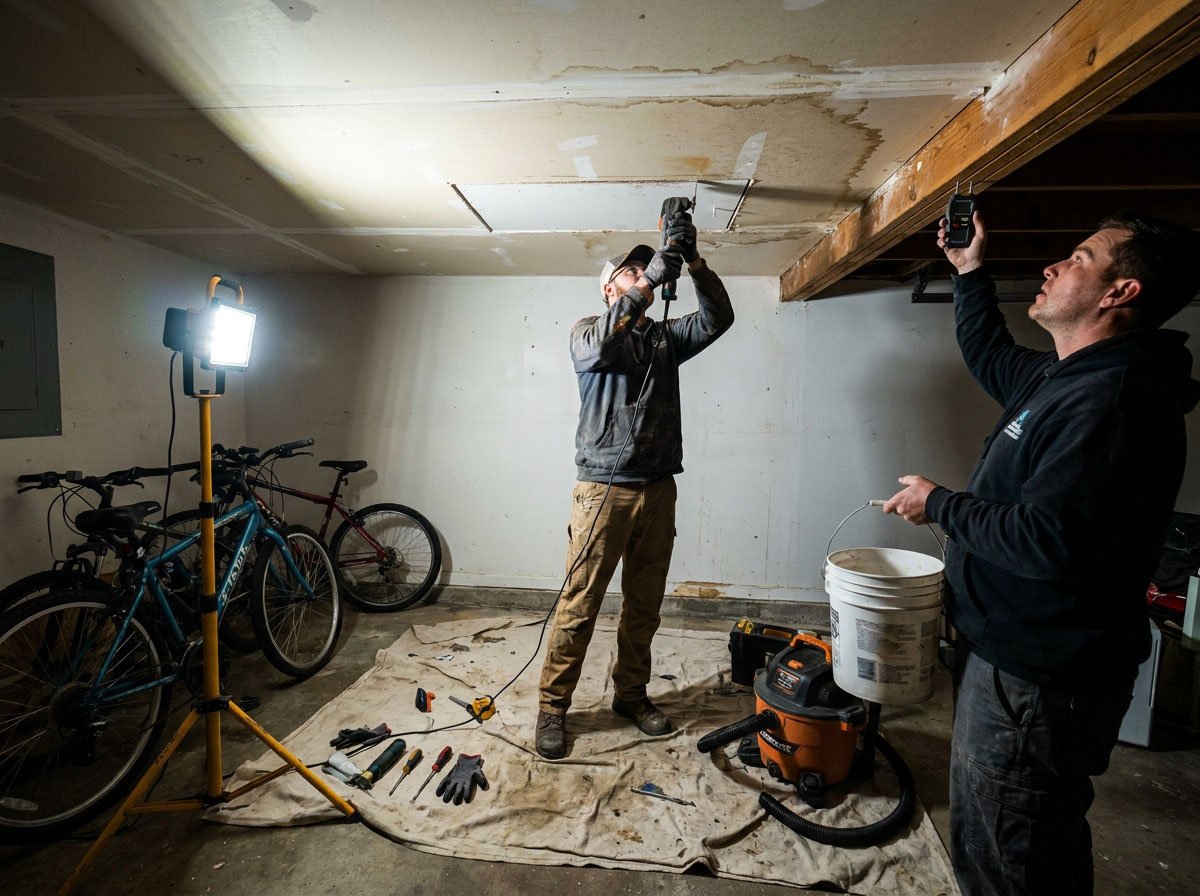
Why Choose Winona County Water Damage Restoration Business in Downtown Winona

When water damage strikes your property, you need a team that knows the layout of Winona as well as you do. Our crew is rooted right here in the community, allowing us to navigate quickly from the iconic Sugar Loaf bluff down to the historic buildings lining Main Street without delay. We understand the specific logistical challenges of downtown access and local building codes, ensuring your restoration is handled without wasted time and professionally. We treat every Winona home with the care it deserves, providing reliable service that respects our neighbors and our shared local surroundings.

🕒

Rapid Local Response

We are stationed nearby to provide prompt arrival at your property. Our familiarity with downtown routes ensures we reach your location quickly when time is of the essence.

🛠️

Downtown Expertise

Our technicians are experienced with the unique architectural styles and older infrastructure found in downtown Winona, allowing for precise repairs and effective moisture mitigation strategies for your home.

📞

Direct Local Communication

You will speak with our team directly, not a distant call center. We provide clear, consistent updates regarding your restoration progress throughout the entire drying and repair process.

Trusted Community Standards

We operate with a commitment to integrity and quality workmanship. Being neighbors ourselves, we maintain high standards to support the resilience and recovery of our local Winona community.

FAQs

Water Damage Restoration FAQs for Downtown Winona

Check The Most Frequently Asked Questions About Water Damage Restoration in Downtown Winona

Does the Winona levee mean my downtown basement cannot flood?
No. The levee stops river water from entering the city, and it does that job well. It does not stop the water table from rising underneath the flats when the Mississippi is high, and it does not stop storm or sanitary sewers from backing up under pressure. Most downtown basement losses we see happen while the levee is holding perfectly. The water comes up through the floor drain, the cove joint or the slab, not over the wall.
At what river stage should I start watching my basement in Downtown Winona?
Flood stage at the Winona gauge is 13 feet, but the practical answer is earlier. Once Levee Road goes under at around 9 feet, groundwater under the flats is already climbing. That is the point to test your sump pump, clear the discharge line and move anything valuable off the basement floor. By the time the river reaches 20 feet and the concrete flood wall is in play, interior drainage is slow and any pump failure becomes a flooded basement quickly.
My basement has a stone foundation. Can it be dried without tearing everything out?
Often yes, but not always. Limestone and rubble foundations hold moisture in the mortar and in the stone itself, so drying takes longer than a poured wall and needs more dehumidification. If the basement is unfinished, drying in place is usually the right call. If it is finished, the framing and insulation against the wall almost always have to come out, because there is no way to move air through a sealed cavity. The moisture map made on the first visit decides it.
What does water damage restoration cost in Downtown Winona?
A contained loss in one room typically runs $1,200 to $3,500. A multi room loss with material removal and full structural drying usually falls between $3,500 and $8,000. A flooded basement in an older downtown building with tear out and reconstruction can reach $8,000 to $20,000 or more. Those are planning figures for this market. Your binding number comes from the contractor after an on site inspection, because water category and drying time change the scope.
Is groundwater seepage covered by homeowners insurance in Minnesota?
Usually not under a standard policy. Sudden and accidental losses such as a burst supply line or a failed water heater are generally covered. Groundwater rising through a slab, surface water entering the property and sewer backup are typically excluded unless you carry a specific endorsement. Sewer and drain backup coverage is a common and inexpensive add on in this part of Minnesota. Check your declarations page and speak to your agent before you assume.
Do you work in the Historic Commercial District downtown?
Yes. Commercial buildings along Third and Fourth Street bring their own problems: shared party walls, tenant spaces above and below, and older sprinkler and supply lines running through occupied floors. Water in one unit rarely stays in one unit. The priority is stopping the source, protecting the tenants below and documenting the loss for multiple insurers at once. See our commercial water damage restoration page for how that work is scoped.

Have more questions? We're here to help.

📞 (507) 698-9249

Find Us Near Downtown Winona

Local Water Damage Restoration services in Downtown Winona and surrounding areas

Contact Winona County Water Damage Restoration

📍
Downtown Winona - Winona County, MinnesotaServing local and nearby neighborhoods
Emergency Service
Call Today