Serving St. Charles

Water Damage Restoration in St. Charles, MN

Up on the prairie at 1,132 feet, the river is not your problem. Groundwater moving through karst bedrock is.

Up On The Prairie, Water Problems Start Underground
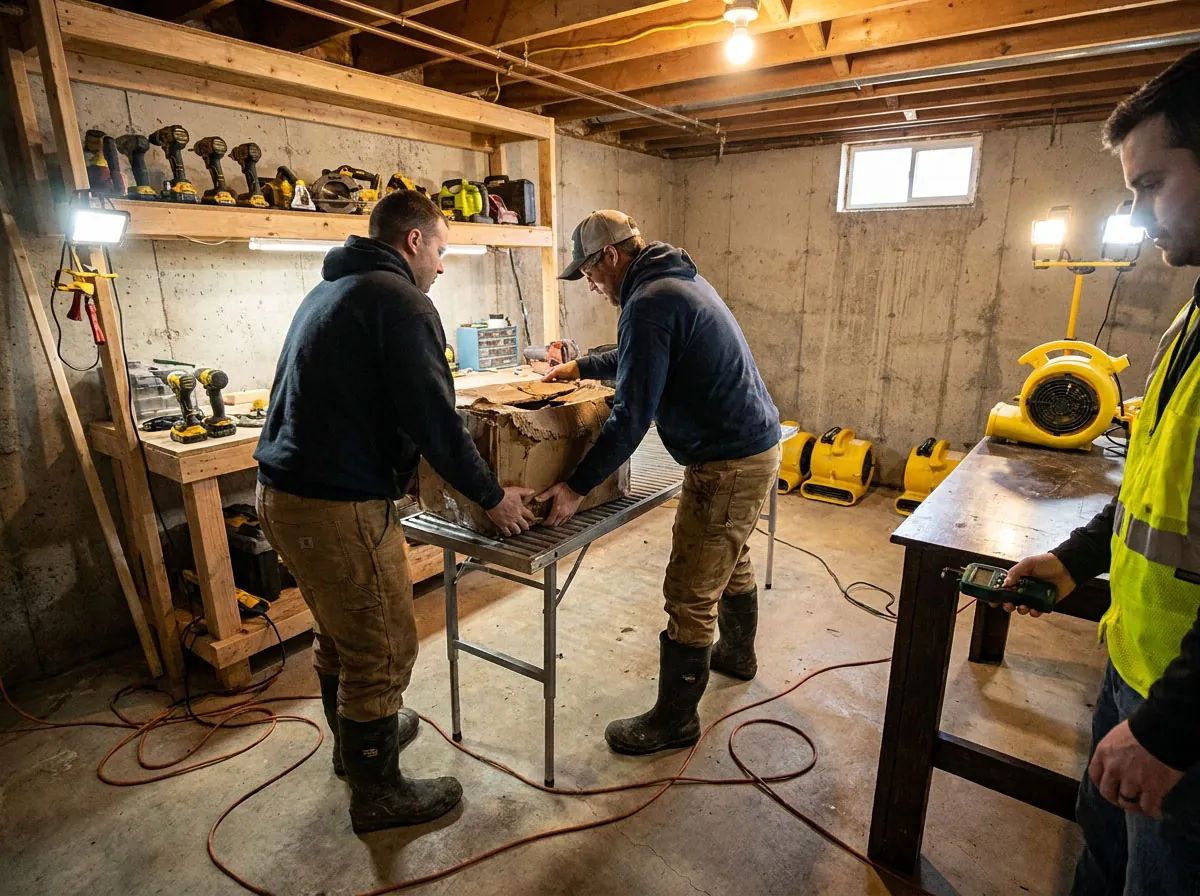
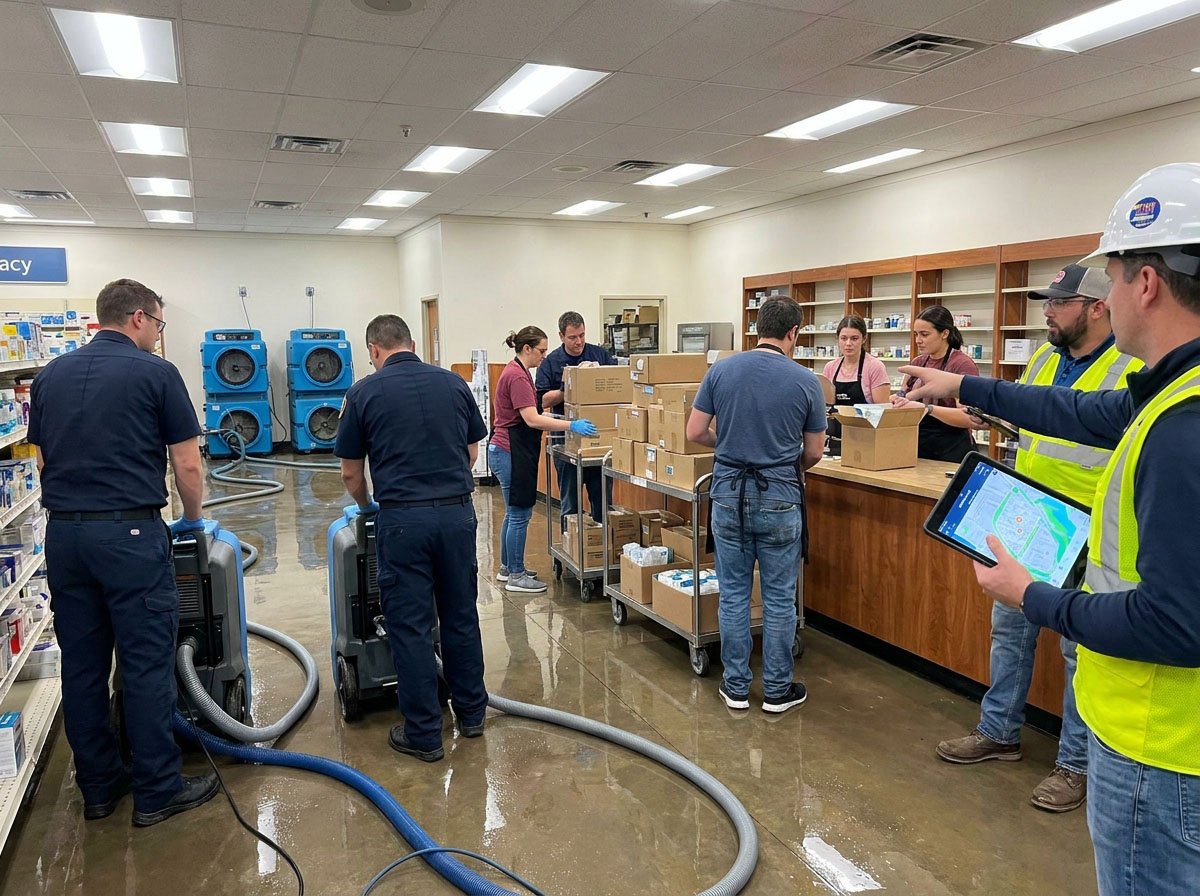
Structural drying at a St. Charles, Minnesota property

St. Charles sits at about 1,132 feet of elevation, roughly 486 feet above the Mississippi at Winona. Nobody out here worries about river stage. The water problems in this part of Winona County come from a different direction entirely.

This is Driftless Area country. The Wisconsinan glacier never reached it, so the old bedrock stayed exposed and groundwater has been dissolving it for a very long time. Underneath the farm ground west of Winona lies carbonate rock, Oneota Dolostone and the Prairie du Chien Group, shot through with fractures, conduits, sinkholes and springs.

Hydrologists have mapped this using dye tracing, and the results are counterintuitive. Water entering the ground in one valley can travel under a bluff and emerge in the next valley over. Winona County has been the subject of formal sinkhole distribution studies, and a documented sinkhole collapse occurred at nearby Lewiston in 1991.

For a property owner this means one thing. Surface water does not behave the way it does on ordinary ground. After heavy rain or a fast melt, water can arrive in a basement quickly and from an unexpected side, because it moved through rock rather than soaking through soil.

Rural Properties, Private Wells And Septic Systems

Most of St. Charles Township is farmland, with a population under 700 spread across more than 32 square miles. Properties out here are typically on private wells and septic systems rather than municipal service, and that changes what a water loss means.

When groundwater moves fast through fractured rock, contamination moves with it. A flooded basement on a well served property is not automatically a clean water event. If surface water has reached the wellhead, or if a septic field is saturated, what is standing in the basement may need to be treated as contaminated regardless of how clear it looks.

Rules We Follow On Well And Septic Properties

The practical rules on rural St. Charles properties:

  • Standing water on a well served property is treated as suspect until the source is confirmed.
  • If the wellhead has been submerged, the well needs testing before anyone drinks from it again.
  • A saturated septic field means the system is not accepting flow, so running water into the house makes the basement worse.
  • Outbuildings, milk houses and shops get metered too. Water rarely limits itself to the residence.
  • Long private drives affect access, so tell us about gate codes and turning space when you call.

Where sewage or septic contamination is involved, the affected material comes out rather than being dried. Our sewage backup cleanup page covers that protocol.

The Whitewater Valley And The Highway 74 Corridor

St. Charles calls itself the gateway to Whitewater, and Whitewater State Park sits about seven miles north on Highway 74. The valley draws around 300,000 visitors a year, and the properties along that corridor include cabins, seasonal buildings and homes tucked into the valley floor.

Seasonal and part time occupied buildings are where the worst losses happen, because nobody is there to notice. A supply line that fails in a closed cabin in February can run for weeks. By the time someone opens the door in spring, the question is no longer drying, it is what can be saved.

If you own a property along the Whitewater corridor that sits empty for part of the year, shut the water off at the main when you leave and drain the lines. It is the single cheapest piece of prevention available to you.

What Our Response Looks Like Out Here

Rural response takes longer than town response, and we will tell you honestly what the arrival window is rather than quoting a number we cannot hit. In the meantime, shutting off the water main and killing power to affected circuits does more good than anything else.

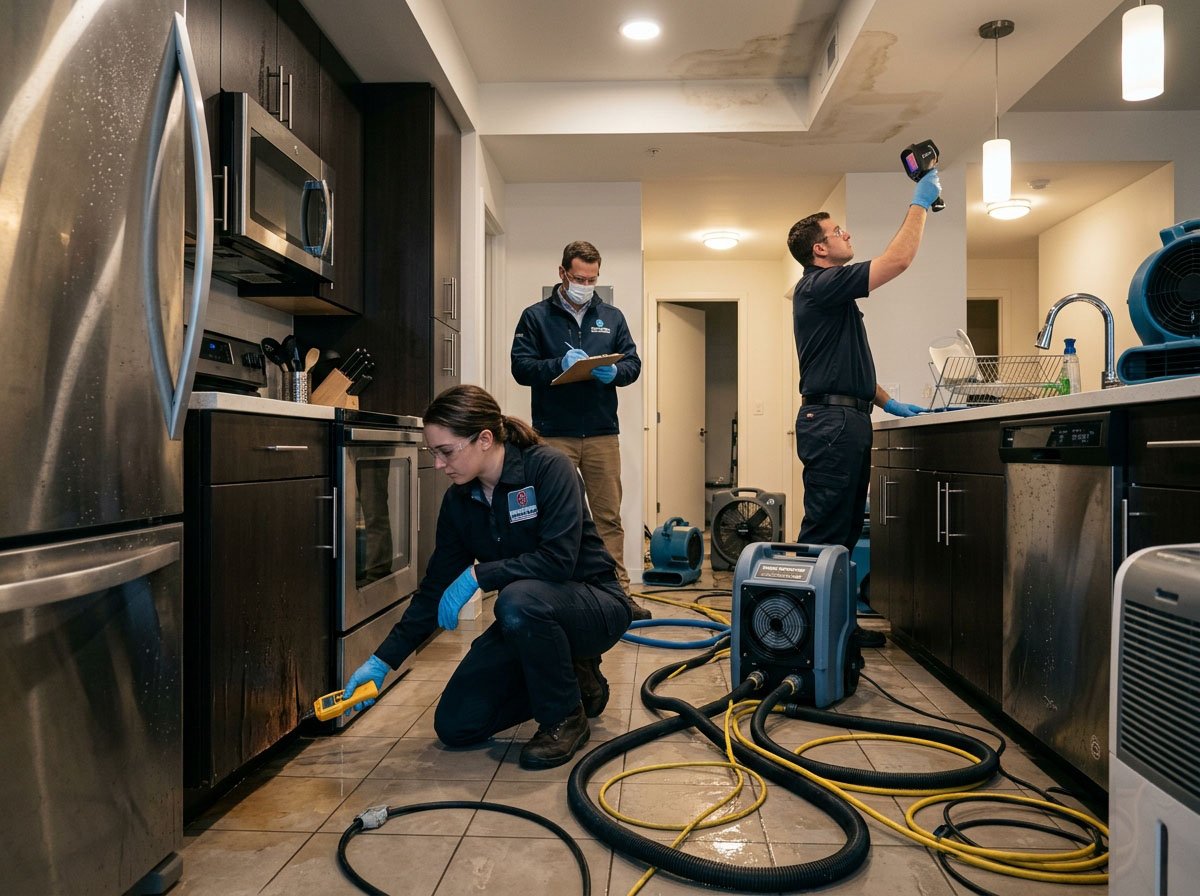
On arrival the contractor identifies the water category first, which on a well and septic property matters more than it does in town. Moisture mapping follows, then extraction, then containment and structural drying with equipment sized to the space. Readings get logged daily against a dry standard until the structure matches.

For properties where water has been sitting for weeks, mold is already established and the job starts as remediation rather than drying. See mold remediation for how that is handled.

Call (507) 698-9249 for St. Charles and the surrounding townships.
Why Choose Winona County Water Damage Restoration Business in St. Charles

When water damage strikes your home, you need a team that truly knows St. Charles. Being based right here allows us to reach you quickly, whether you are near the historic downtown along Whitewater Avenue or located out toward the beautiful bluff countrys of Whitewater State Park. Our local presence means we understand the unique climate challenges in Winona County, ensuring our equipment and crew are always ready for a prompt response. We prioritize clear communication and honest work, helping your neighbors recover from unexpected flooding with local expertise and steady, reliable service.

πŸ•’

Rapid Local Response

Because our crews are based within St. Charles, we minimize travel time to your property, allowing us to begin drying and mitigation efforts exactly when you need them most.

πŸ› οΈ

Expert Mitigation Skills

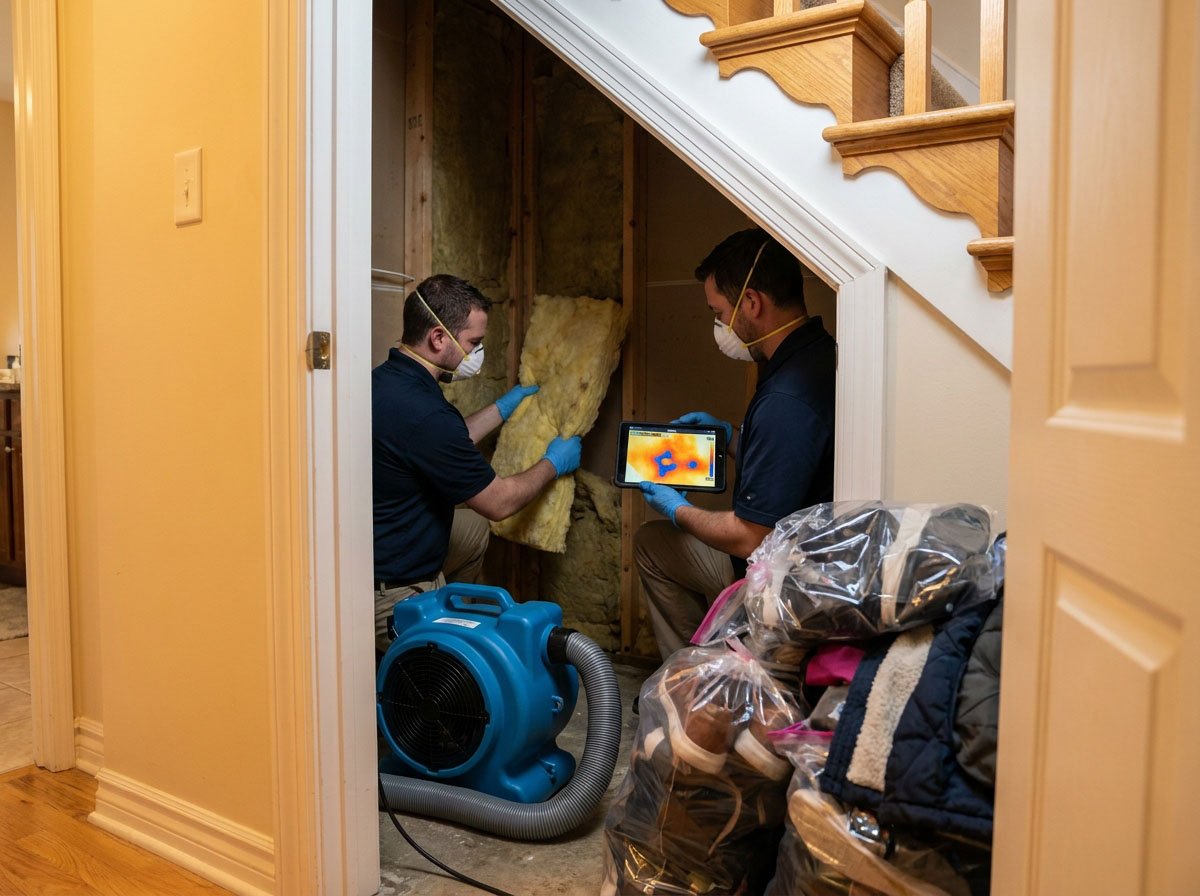
We use professional-grade drying equipment suited for the local housing stock in Winona County, ensuring moisture is removed effectively to protect your home’s structural integrity and overall air quality.

πŸ“ž

Dedicated Local Support

Our team values the relationship we have with the St. Charles community, providing transparent updates and clear guidance throughout the restoration process to keep your stress levels low.

βœ…

Thorough Damage Assessment

We conduct comprehensive inspections of your property to identify hidden water pockets, ensuring that every affected area is addressed according to industry standards for long-term safety and stability.

FAQs

Water Damage Restoration FAQs for St. Charles

Check The Most Frequently Asked Questions About Water Damage Restoration in St. Charles

St. Charles is nowhere near the river. Why do basements still flood here?
Because the water arrives from underground rather than from the Mississippi. This corner of Minnesota is Driftless Area karst, where carbonate bedrock is riddled with fractures, conduits, sinkholes and springs. Water entering the ground after heavy rain or snowmelt moves through rock quickly and can surface a long way from where it went in. Dye tracing studies in Winona County have shown groundwater passing under a bluff from one valley into the next.
My property is on a private well. Is a flooded basement still safe to clean up myself?
Treat it as unsafe until the source is confirmed. On a well and septic property, fast moving groundwater can carry contamination with it, and water that looks clear may not be. If the wellhead was submerged at any point, have the well tested before drinking from it. If the septic field is saturated the system will not accept flow, so running water in the house makes the flooding worse. Call before you start pulling up carpet.
How long does it take to reach a rural property outside St. Charles?
Longer than in town, and we will give you a straight arrival window rather than a number we cannot meet. St. Charles Township covers more than 32 square miles with fewer than 700 residents, so travel time varies a lot by location. Tell us about gate codes, long drives and turning space for a truck when you call. While you wait, shut off the water at the main and cut power to affected circuits.
I own a cabin near Whitewater State Park that sits empty in winter. What should I do?
Shut the water off at the main every time you leave and drain the lines. Unoccupied buildings along the Highway 74 corridor produce the most severe losses we see, because a failed supply line can run for weeks with nobody there. A leak that would be a two day job in an occupied house becomes a full gut when it has been feeding a closed building since February. A remote temperature and water sensor is a worthwhile addition too.
Does homeowners insurance cover this kind of groundwater intrusion?
Usually not under a standard Minnesota policy. Sudden and accidental events such as a burst pipe or a failed appliance are generally covered. Groundwater entering through a slab or foundation, surface water and septic backup are typically excluded without a specific endorsement. Sewer and drain backup coverage is a modest add on and worth having on a rural property. Read your declarations page and ask your agent directly rather than assuming.
What does water damage restoration cost around St. Charles?
A contained loss in one room is usually $1,200 to $3,500. Multi room damage with material removal and drying typically runs $3,500 to $8,000. A long running loss in an unoccupied building, where mold is already established and material has to come out, can reach $8,000 to $20,000 or more. These are planning ranges for Winona County. The contractor gives you a binding figure after inspecting the property.

Have more questions? We're here to help.

πŸ“ž (507) 698-9249

Find Us Near St. Charles

Local Water Damage Restoration services in St. Charles and surrounding areas

Contact Winona County Water Damage Restoration

πŸ“ž
πŸ“
St. Charles - Winona County, MinnesotaServing local and nearby neighborhoods
⏰
Emergency Service
Call Today