Why Goodview Basements Behave Differently Than Bluff Properties
Goodview was incorporated in 1946 out of roughly 800 acres of watermelon farms and sand and gravel operations on the river plain northwest of Winona. That history is still under your house.
The city sits at about 646 feet of elevation, on the valley floor rather than up on the bluff. The soil is sand. Sand drains fast, which sounds like good news until you understand what it means during a water loss. Water does not pool politely where it spilled. It runs laterally through the substrate and under the slab, and it turns up in a room three doors down from the failure.
The practical consequence: the wet area in a Goodview home is almost always larger than the visible water. Homeowners mop up a laundry room, feel satisfied, and call us nine days later when a bedroom wall on the far side of the house starts to smell.
What We See Most Often In Goodview Homes
Most of the housing here went up after incorporation, so the stock skews post war through modern. That means poured concrete and block basements rather than the limestone you find in old Winona, and it means a different failure list.
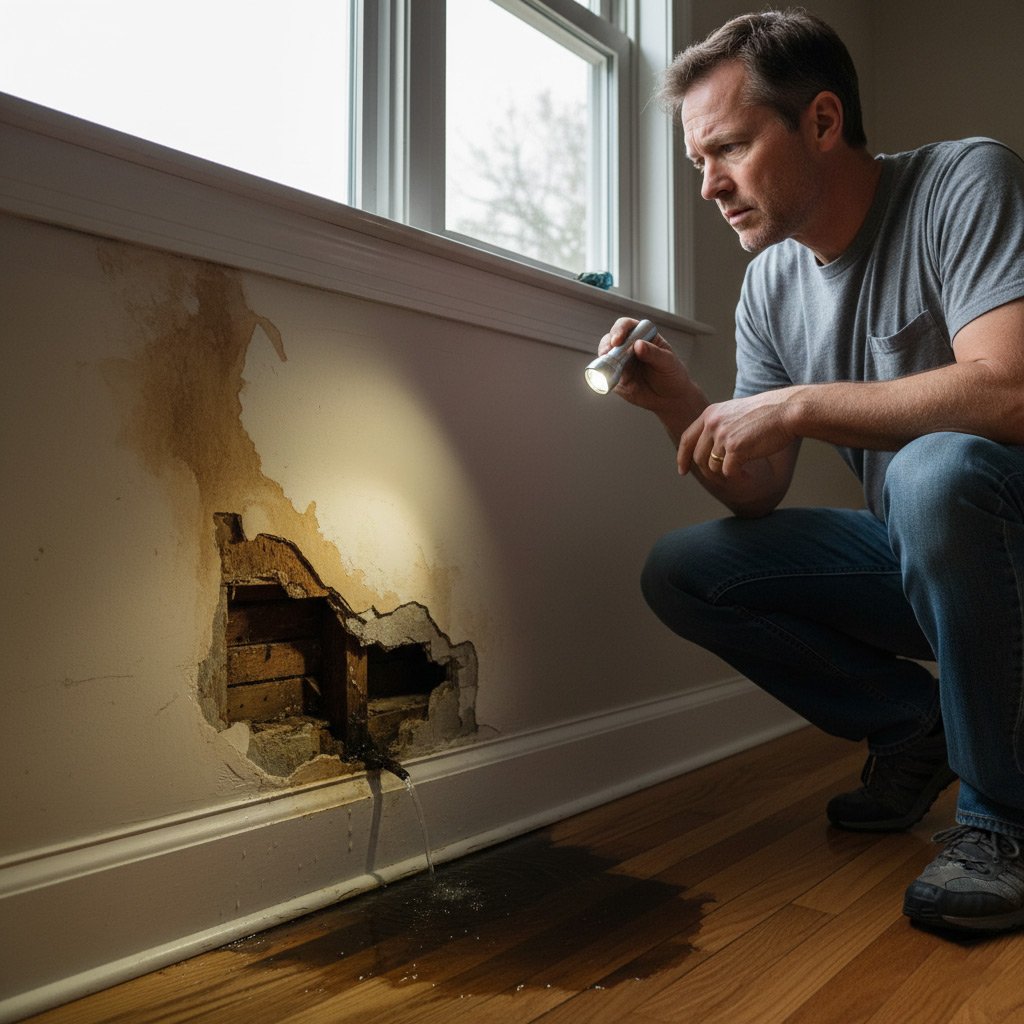
- Water heater and supply line failures. The single most common call. Braided supply lines have a service life, and a lot of them in Goodview are past it.
- Sump pump failures during spring melt. A high water table on the valley floor means many homes here rely on a pump that only matters four weeks a year.
- Frozen and burst pipes in January. Exterior wall plumbing and unheated garage lines in Minnesota winters.
- Washing machine and dishwasher overflows. Slow leaks behind cabinets that soak subfloor for months before anyone notices.
- Sewer backup during heavy rain. Category three water requiring removal rather than drying.
- Ice dam meltwater tracking down inside exterior walls from the roof edge.
Homes And Businesses We Work On In Goodview
Commercial And Industrial Water Losses
Goodview carries a real industrial base for a city of about 4,100 people. Manufacturing operations here include electronic component production, engine rebuilding equipment, composite raw materials, garment production and tire retreading.
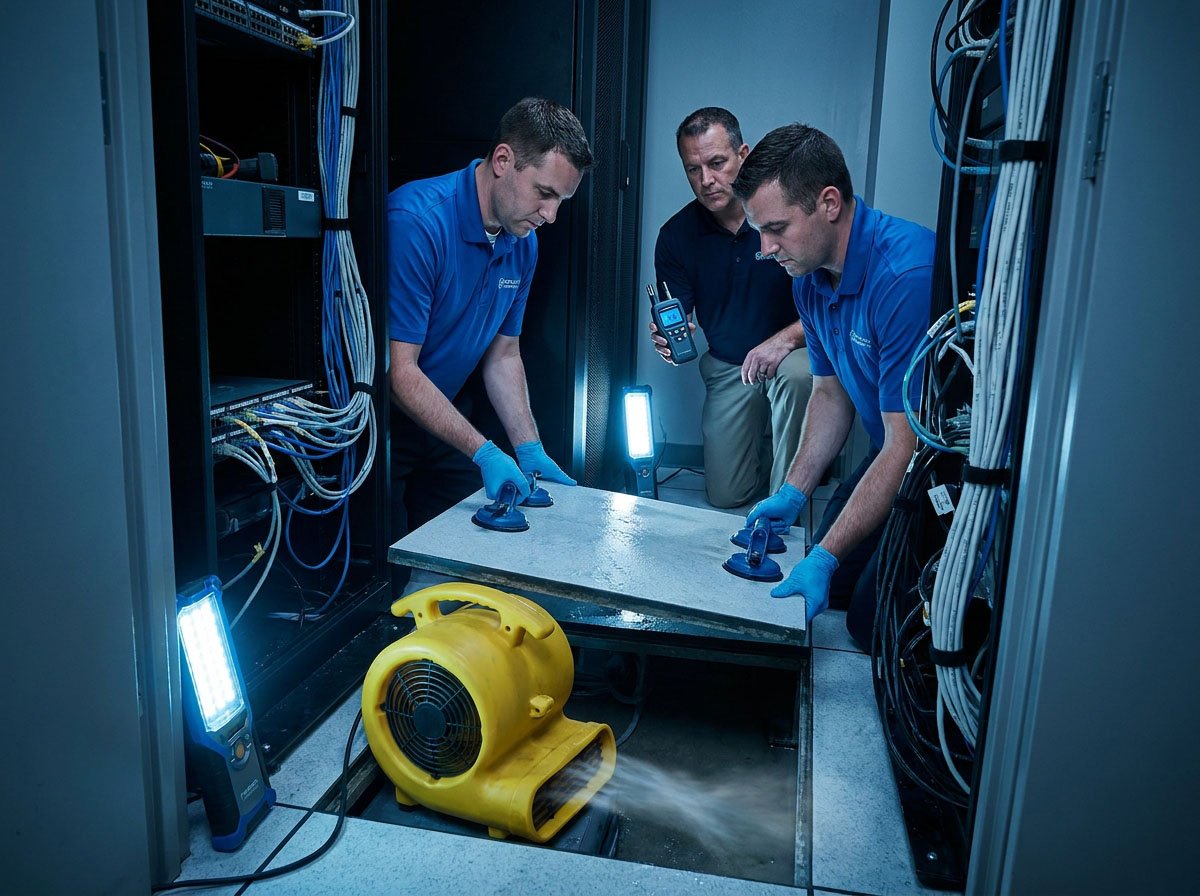
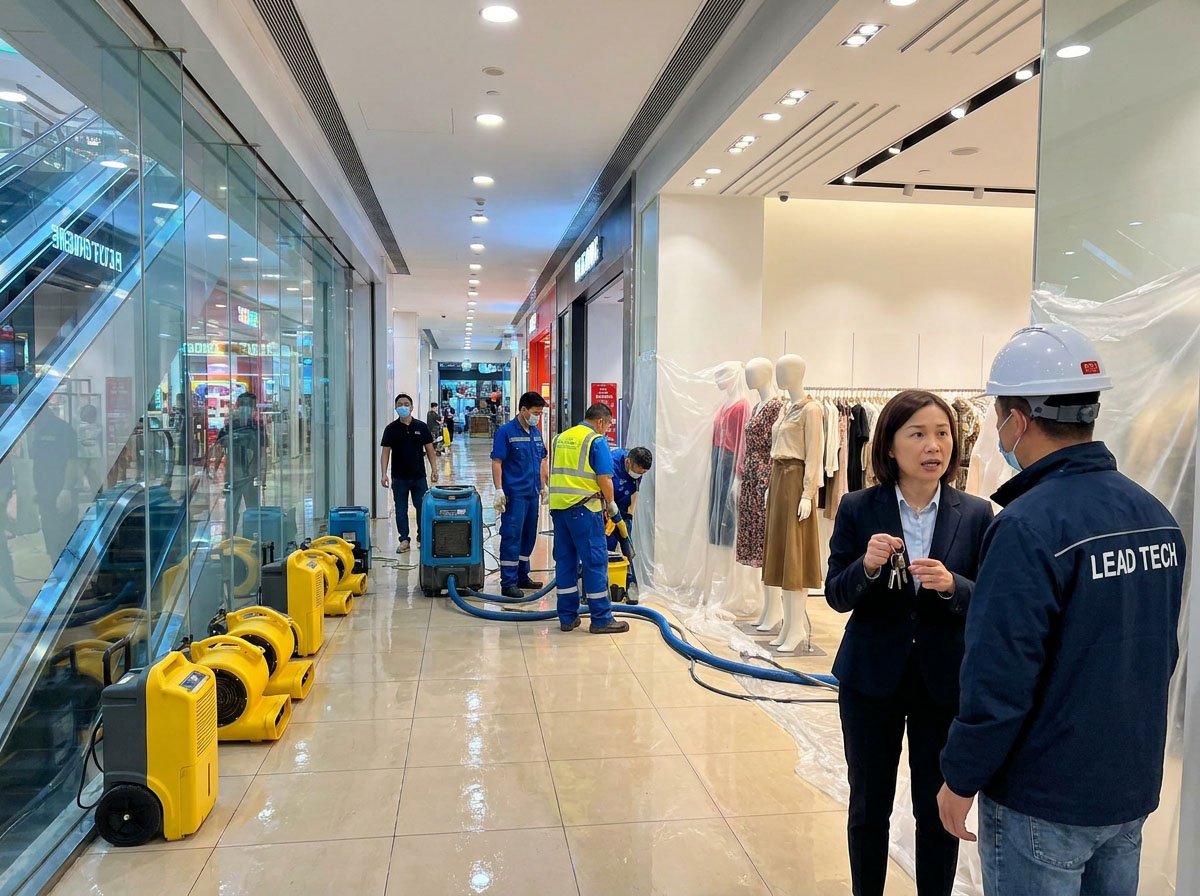
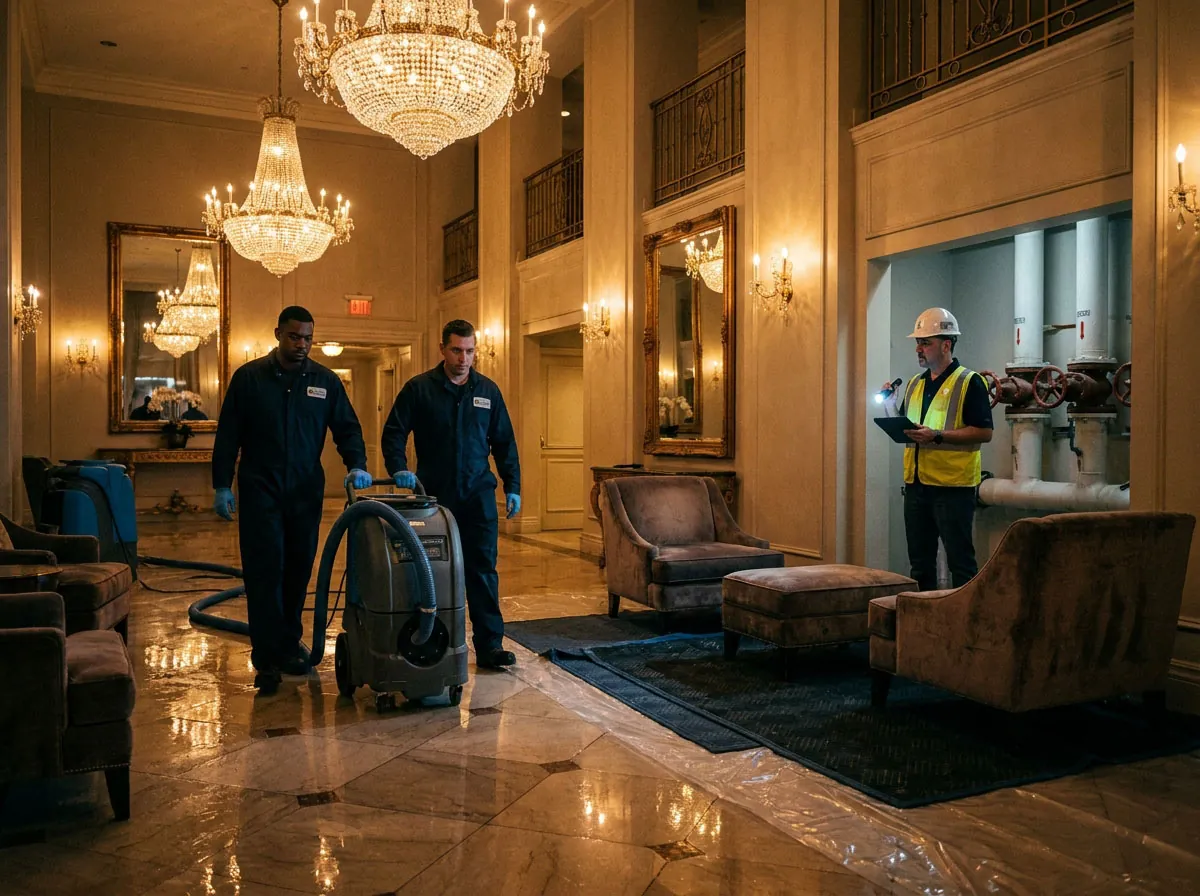
Water in a plant is a different problem from water in a house. Downtime costs more than the drying does. Raw material inventory can be a total loss in hours. Electrical panels and machinery need attention before anyone thinks about the floor slab.
The sequence we push for is stabilise, document, then dry. Stabilise means killing the source and getting power isolated safely. Document means photographing and metering everything before it moves, because a commercial claim is scrutinised harder than a residential one. Only then does drying start, usually with the goal of returning part of the floor to production while the rest stays under containment. Our commercial water damage restoration page covers the scope in detail.
Response, Extraction And Drying
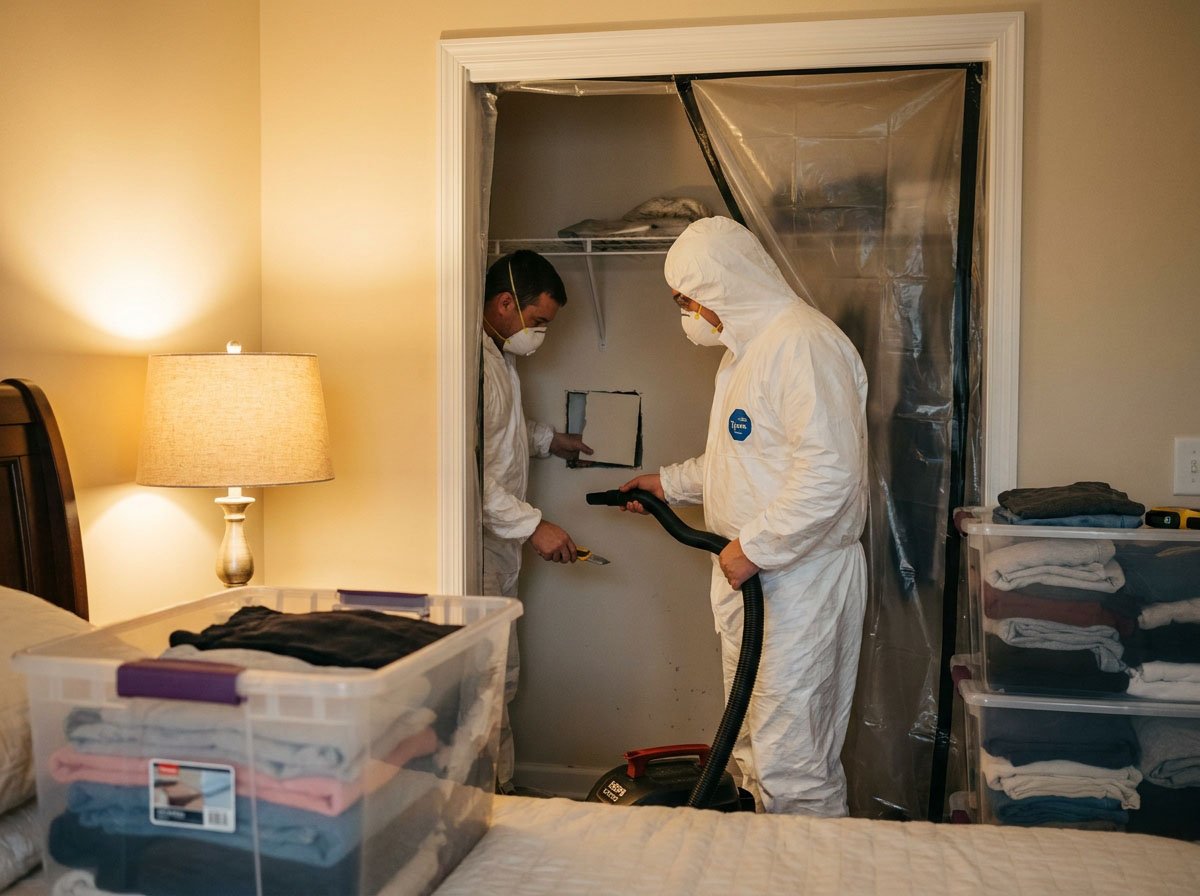
Goodview is minutes from Winona, so response times here are short. That matters more than most homeowners realise. Mold begins colonising porous material within 24 to 48 hours, and in sandy ground with a high water table the clock runs faster because the substrate keeps feeding moisture back into the structure.
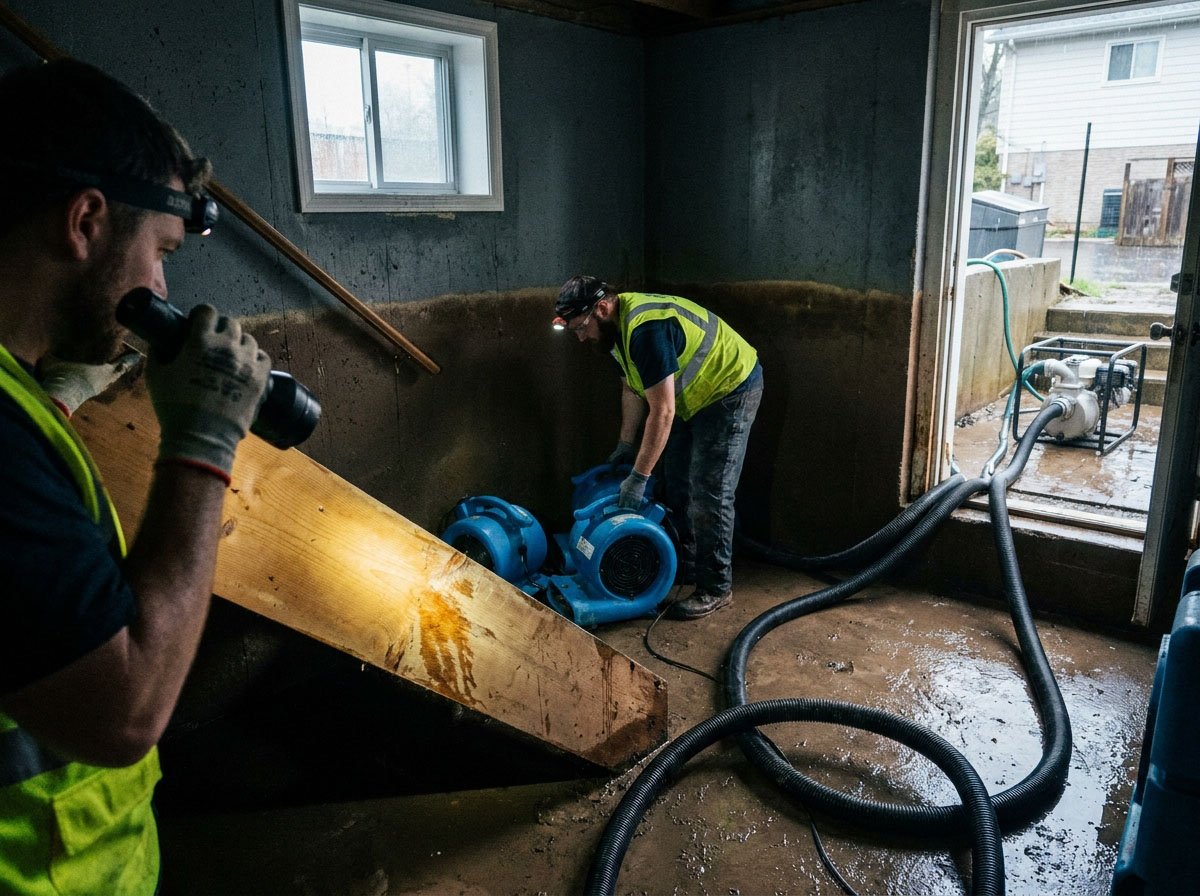
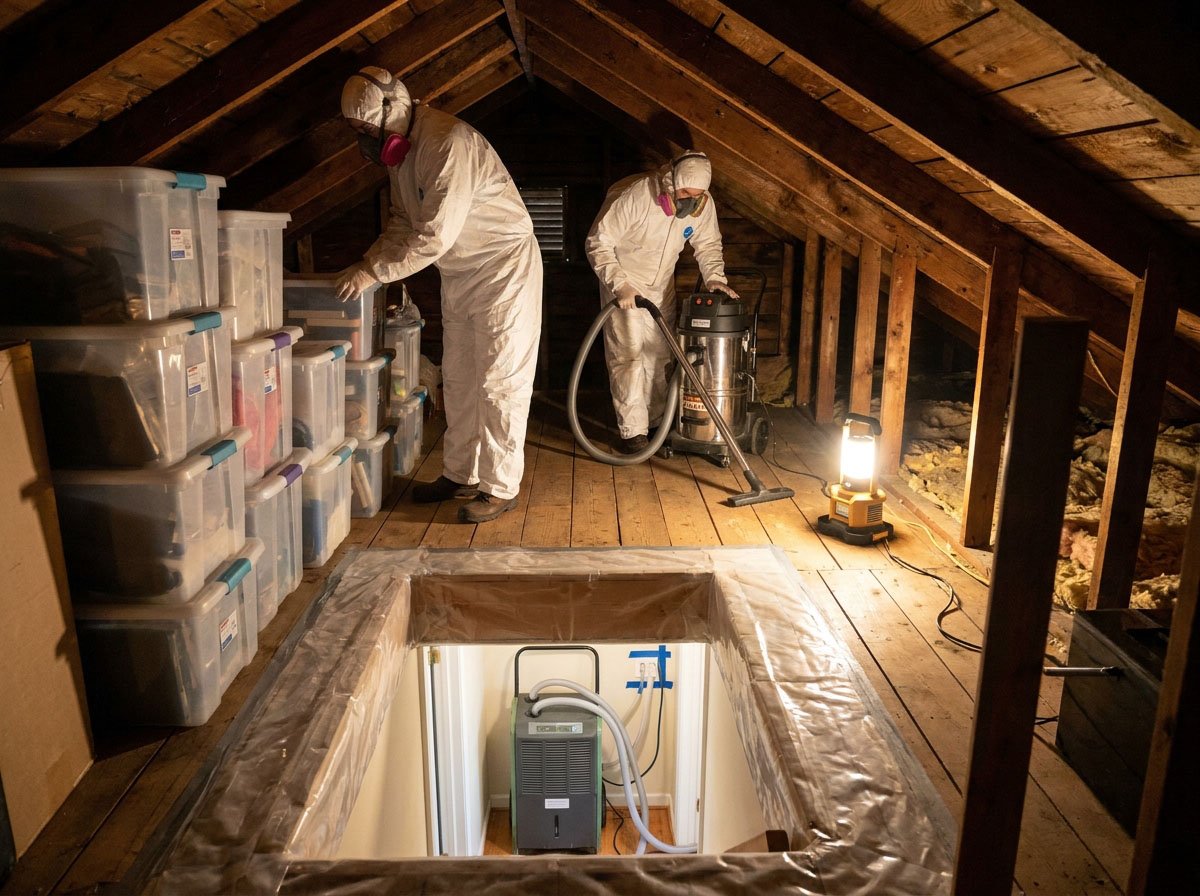
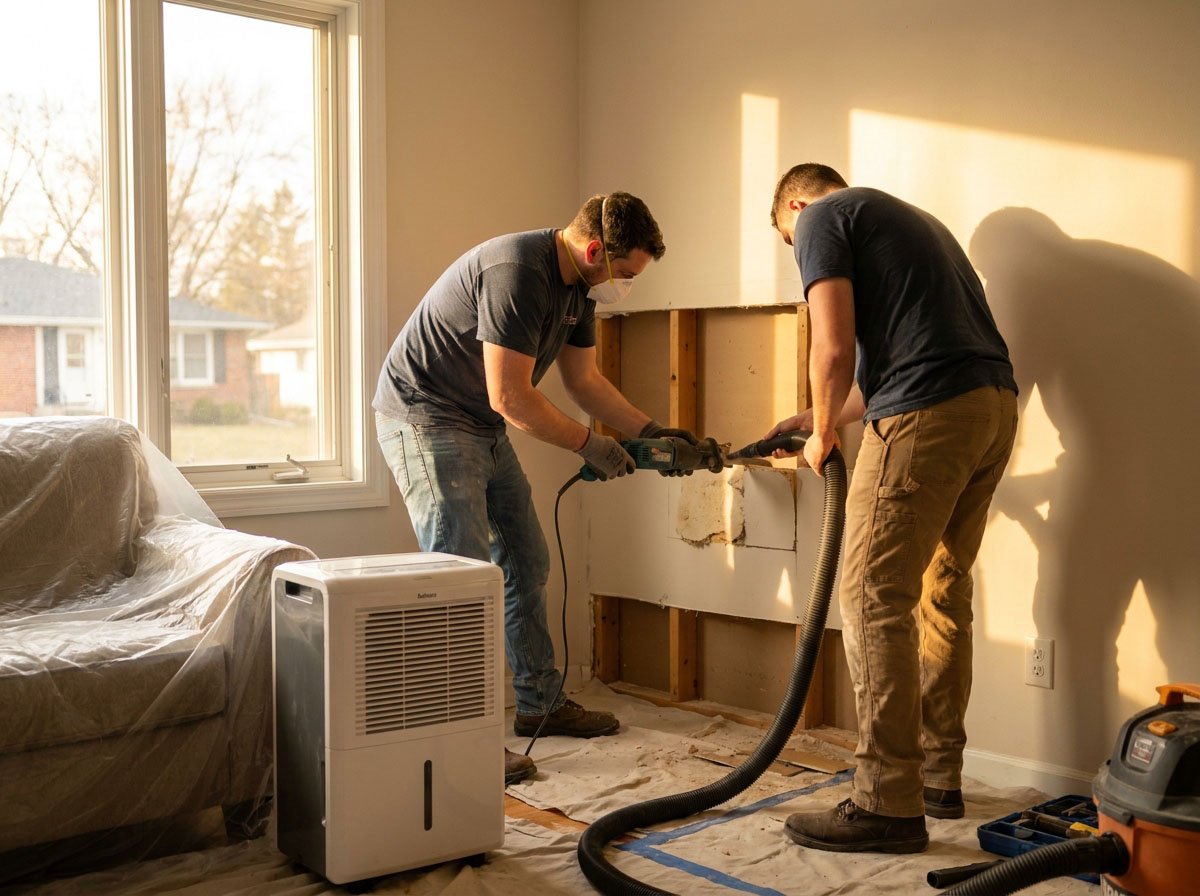
On arrival the contractor meters well beyond the visible edge, specifically checking rooms that share a slab with the failure point. Extraction pulls standing water. Where water has run under the slab or into wall cavities, drying happens through controlled airflow into those cavities rather than at them.
Daily moisture readings are logged against a dry standard from an unaffected part of the house, and equipment stays until the numbers match. If material is unsalvageable, it comes out and gets documented for the claim.
Call (507) 698-9249 for a Goodview property and we will get a contractor moving.