Living Between The River And The Lake
Winona was not built on solid ground. Riverboat captains coming upstream in the 1840s charted it as Island 72, a sandbar prairie sitting in the middle of the Mississippi. Captain Orrin Smith put the first settlement here in 1851 on what was then called Wapasha's Prairie.
The East End sits on that sand, on a strip with the Mississippi on the north side and the east basin of Lake Winona on the south. Lake Winona is not a natural lake in the usual sense. It is a cut off section of the river's old main channel.
What That Means Under Your Floor
Water on two sides and sand underneath produces a shallow water table across most of the East End. In a wet spring the standing water level under some of these blocks sits only a few feet below basement slab depth.
That does two things. It puts constant hydrostatic pressure on foundation walls, and it means any water released inside the house has somewhere easy to go. Sand carries it sideways and under the slab rather than holding it where it fell.
Older Housing Stock On The East Side
A lot of the East End housing predates modern foundation waterproofing entirely. Block and poured walls from the early and mid twentieth century, floor drains connected to clay laterals, and basements finished at some point since with framing set flat against masonry.
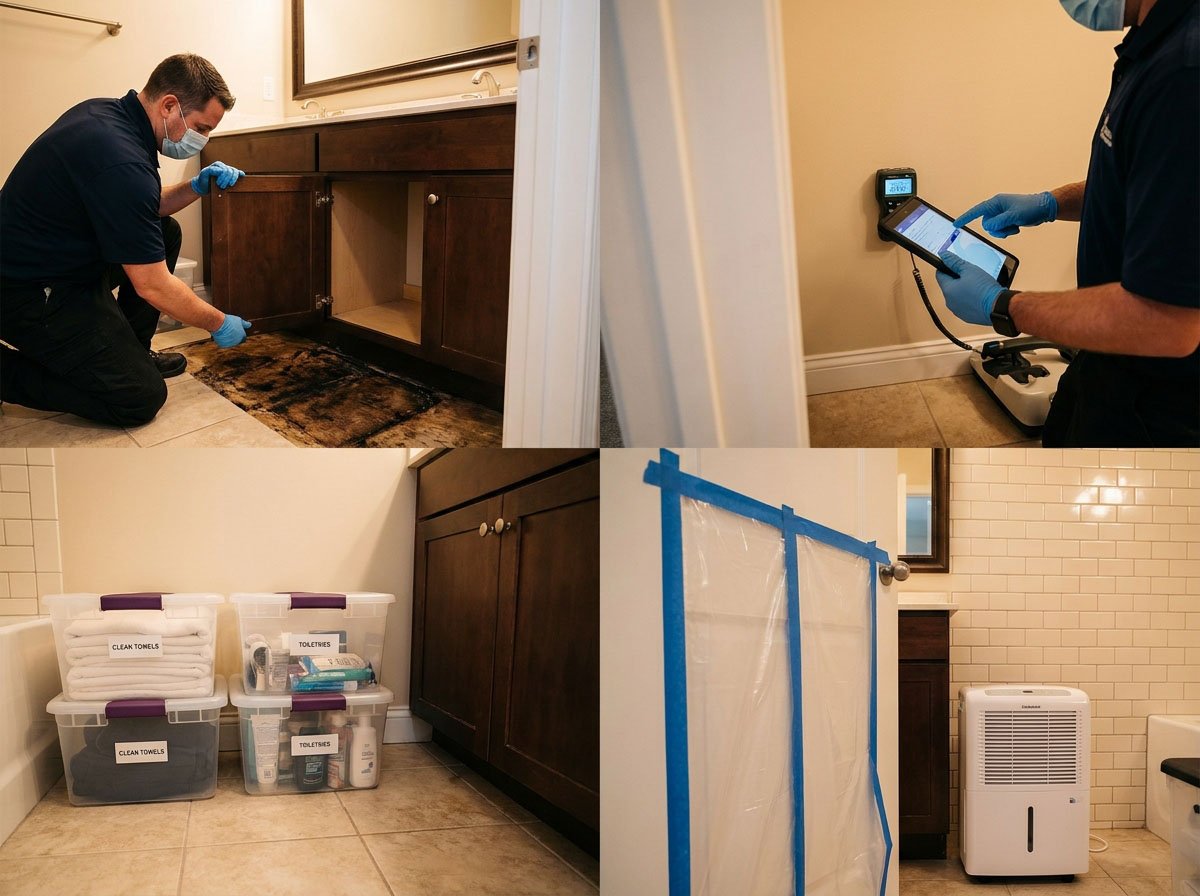
The failure pattern is consistent. Water enters at the cove joint where wall meets slab, or backs up through the floor drain when the sanitary line surcharges during heavy rain. In a finished basement it goes straight behind the drywall.
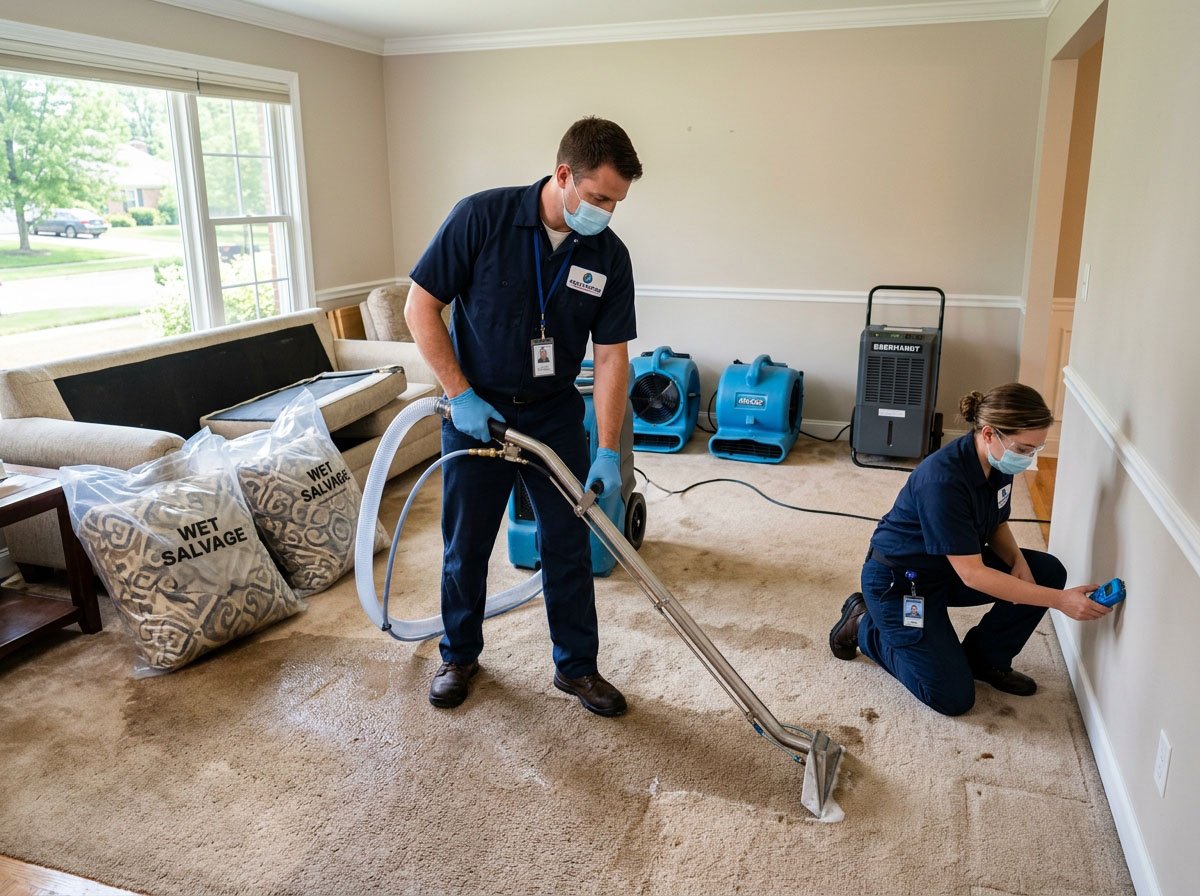
What We Do On An East End Call
Metering Before Demolition
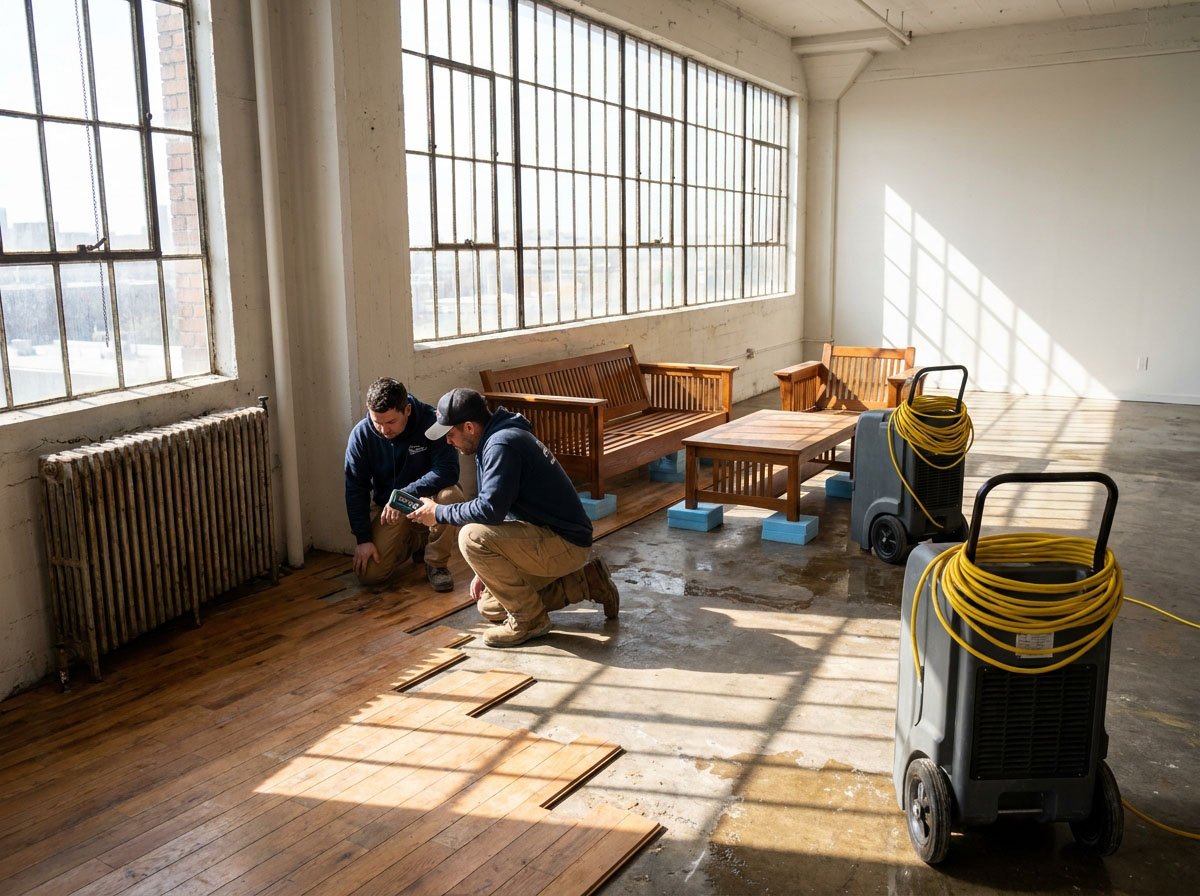
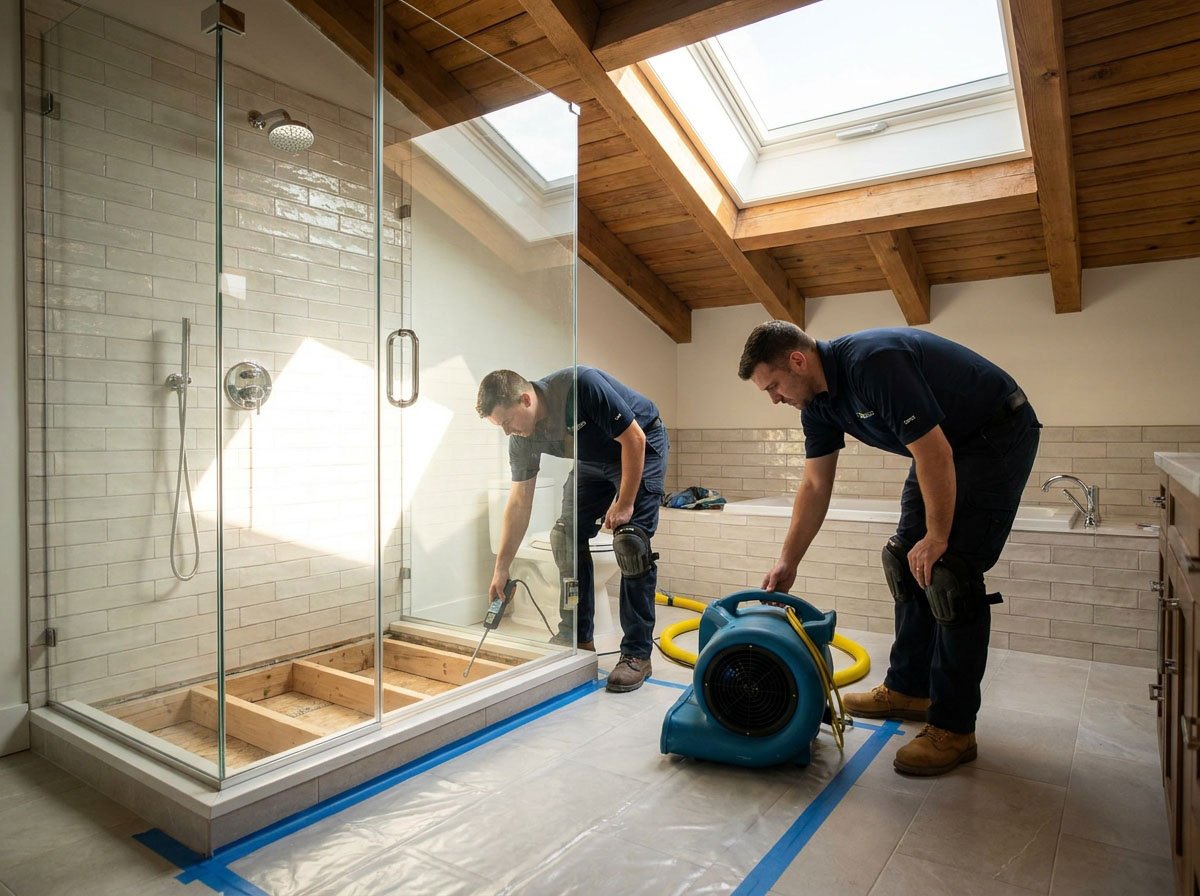
The contractor maps moisture before anything comes out. On sand substrate the wet edge routinely sits two or three rooms beyond the visible water, so guessing at the boundary wastes material and money.
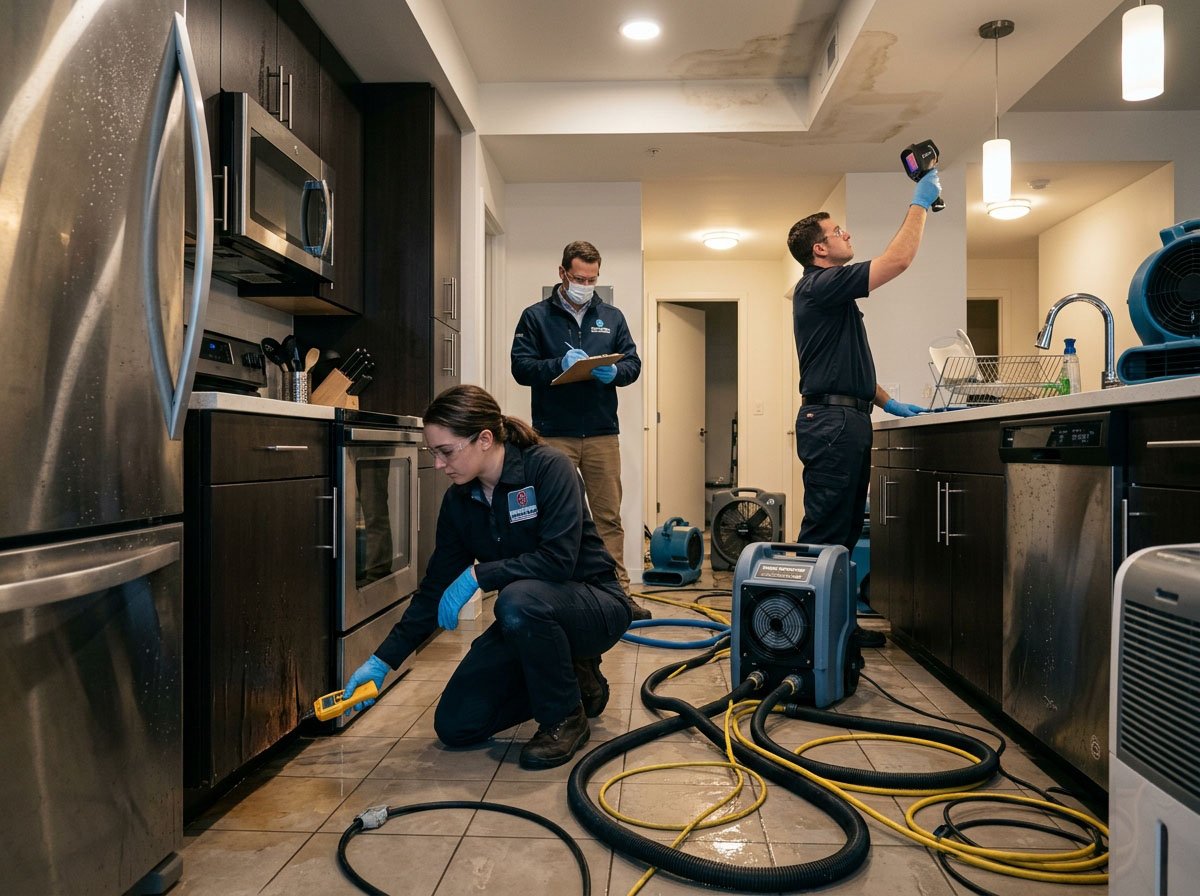
Thermal imaging finds the temperature differential, pin meters confirm actual moisture content, and the map decides what gets removed and what dries in place. Readings are logged daily against a dry standard taken from an unaffected part of the house.
Where the water came up through a floor drain rather than out of a supply line, the category changes and so does the protocol. Contaminated water means affected porous material comes out rather than getting dried. See sewage backup cleanup.
Getting Someone There
The East End is minutes from anywhere in Winona, so response is fast. Before the crew arrives, shut the water off at the main and cut power to affected circuits at the panel. If water is rising through the floor rather than spraying from a pipe, the main will not stop it and you should skip straight to the panel.
Call (507) 698-9249 and describe what the water is, where it came from and how long it has been sitting. Those three answers decide what equipment gets loaded.