Winter Is The West End's Water Damage Season
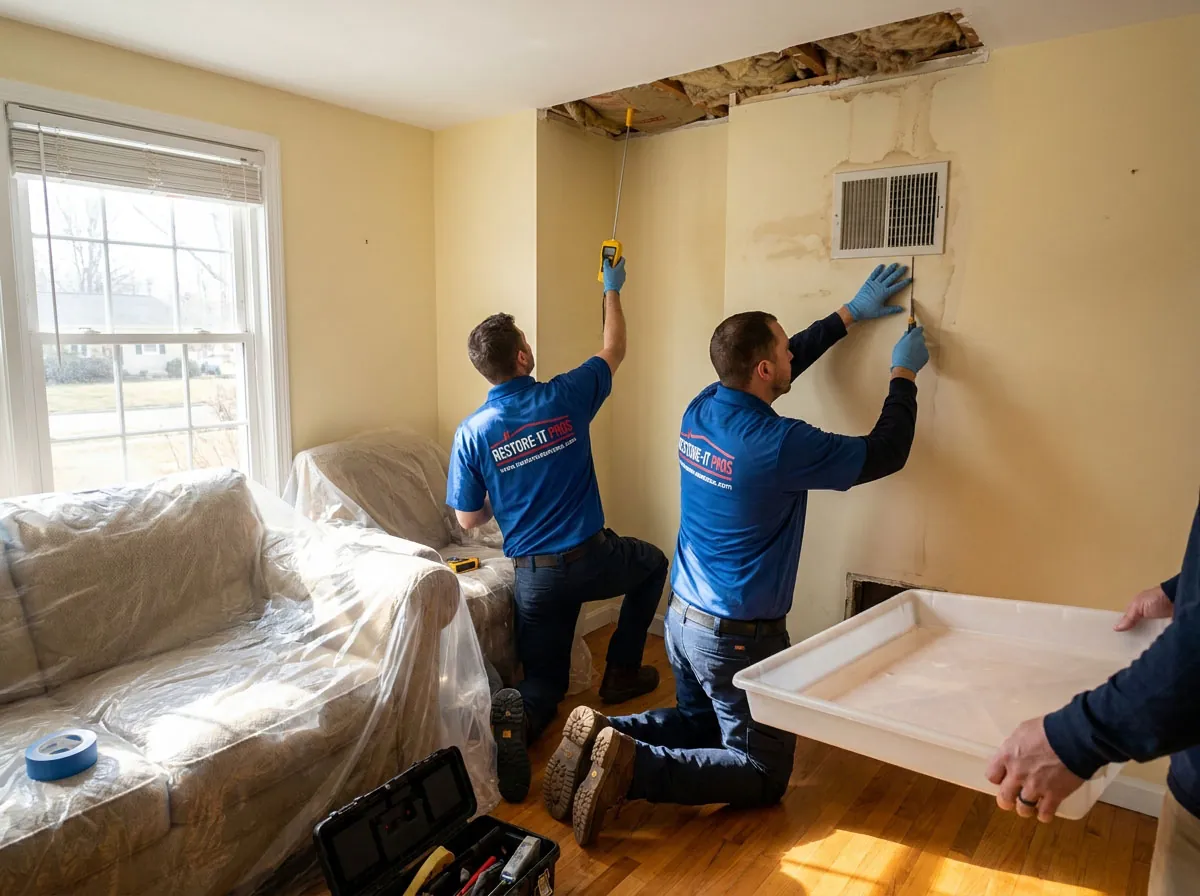
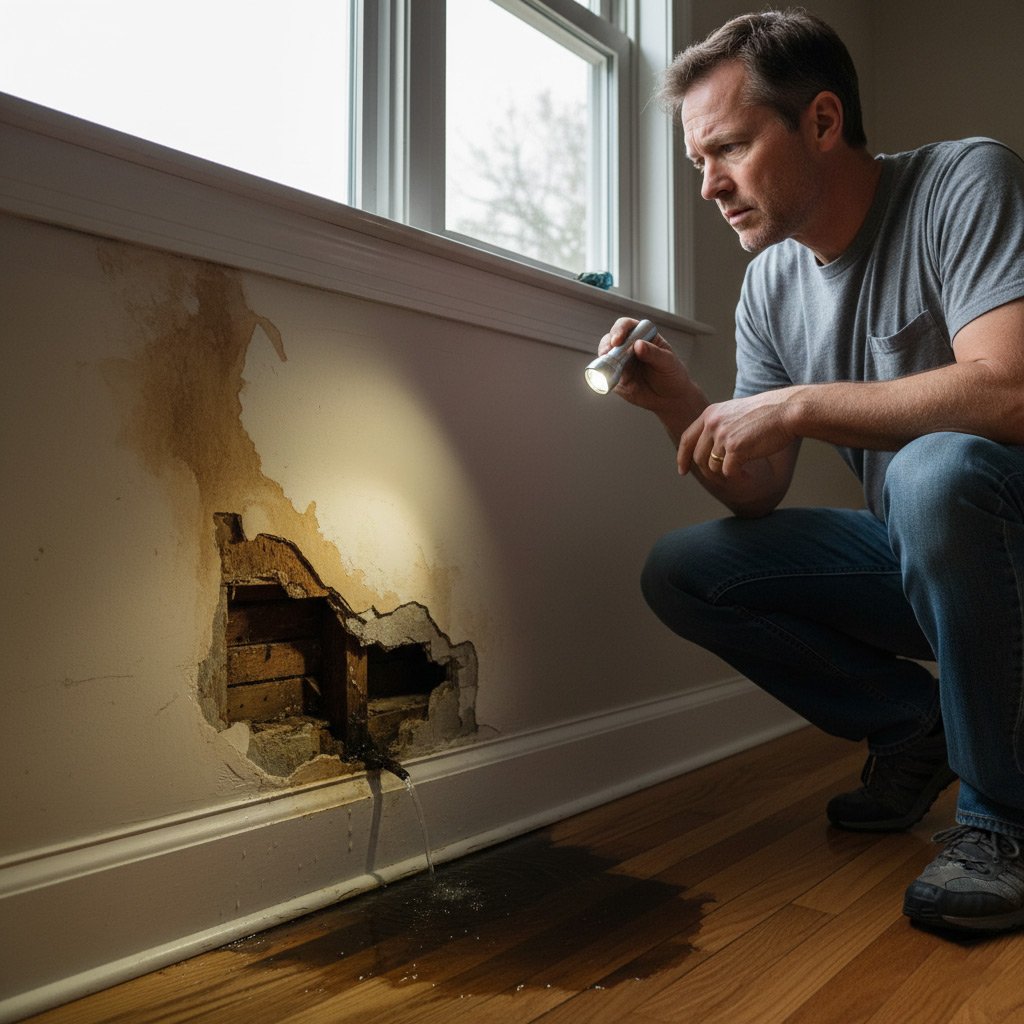
Homeowners expect water damage in spring. In practice the calls that ruin a West End house come during a January cold snap, when an exterior wall supply line freezes, splits, and then thaws while nobody is home.
A quarter inch supply line running at household pressure moves a lot of water in eight hours. The damage is not caused by the freeze. It is caused by the thaw, which is why the discovery is almost always hours after the failure rather than at the moment of it.
The Winter Timeline In A Winona House
| Conditions | What is happening | What to do |
|---|---|---|
| Sustained cold, exterior wall plumbing | Water in the line begins to freeze and expand | Open the cabinet doors under sinks on exterior walls. Let a tap run at a pencil stream. |
| Tap runs dry with the valve open | The line is already frozen somewhere | Shut the main off now, before the thaw. Do not apply open flame to the pipe. |
| Thaw begins, main still open | The split releases at full pressure | This is the failure point. Main off is the only thing that stops it. |
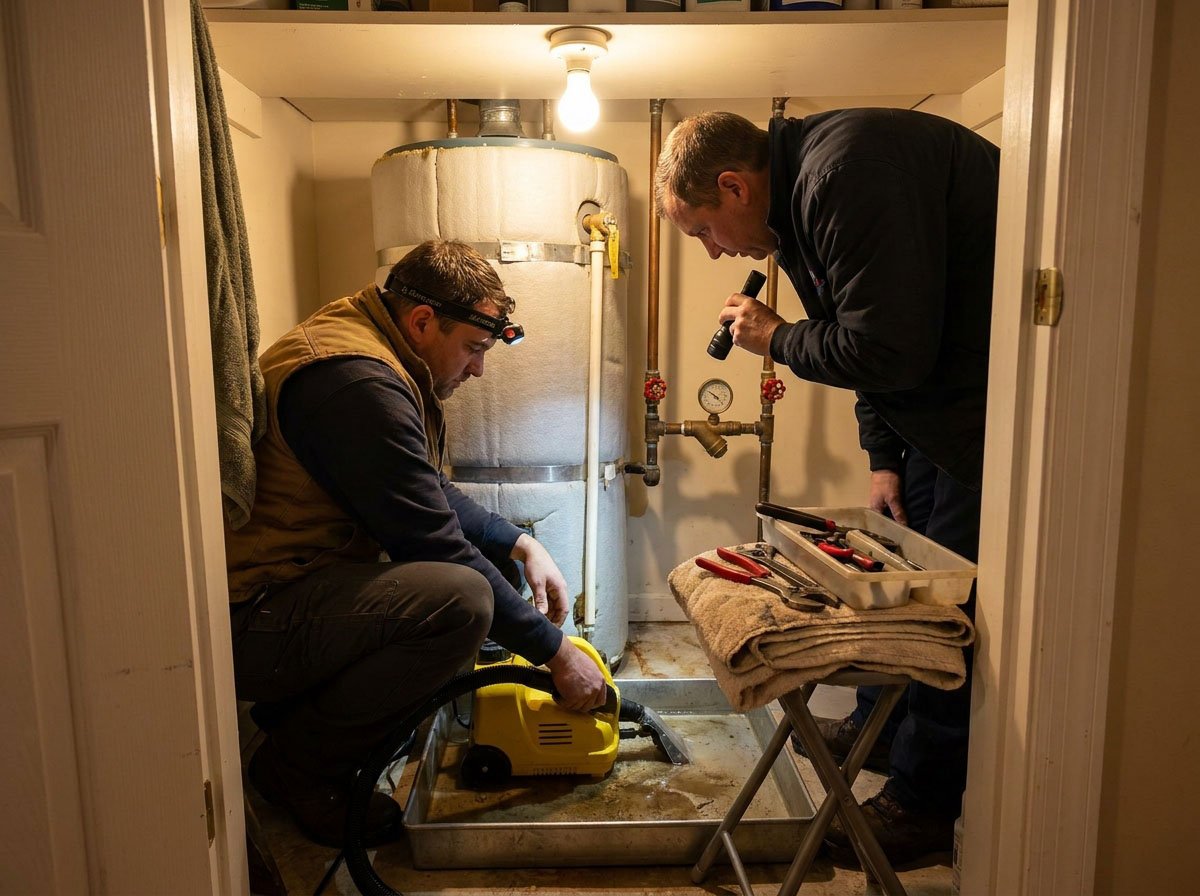
| Discovered hours later | Water has reached subfloor and the level below | Power off at the panel for affected circuits, then call. |
Ice Dams And Meltwater
The second winter pattern is roof related. Heat escaping into the attic melts snow at the ridge, the meltwater runs down and refreezes at the cold eave, and the resulting dam pushes water back up under the shingles.
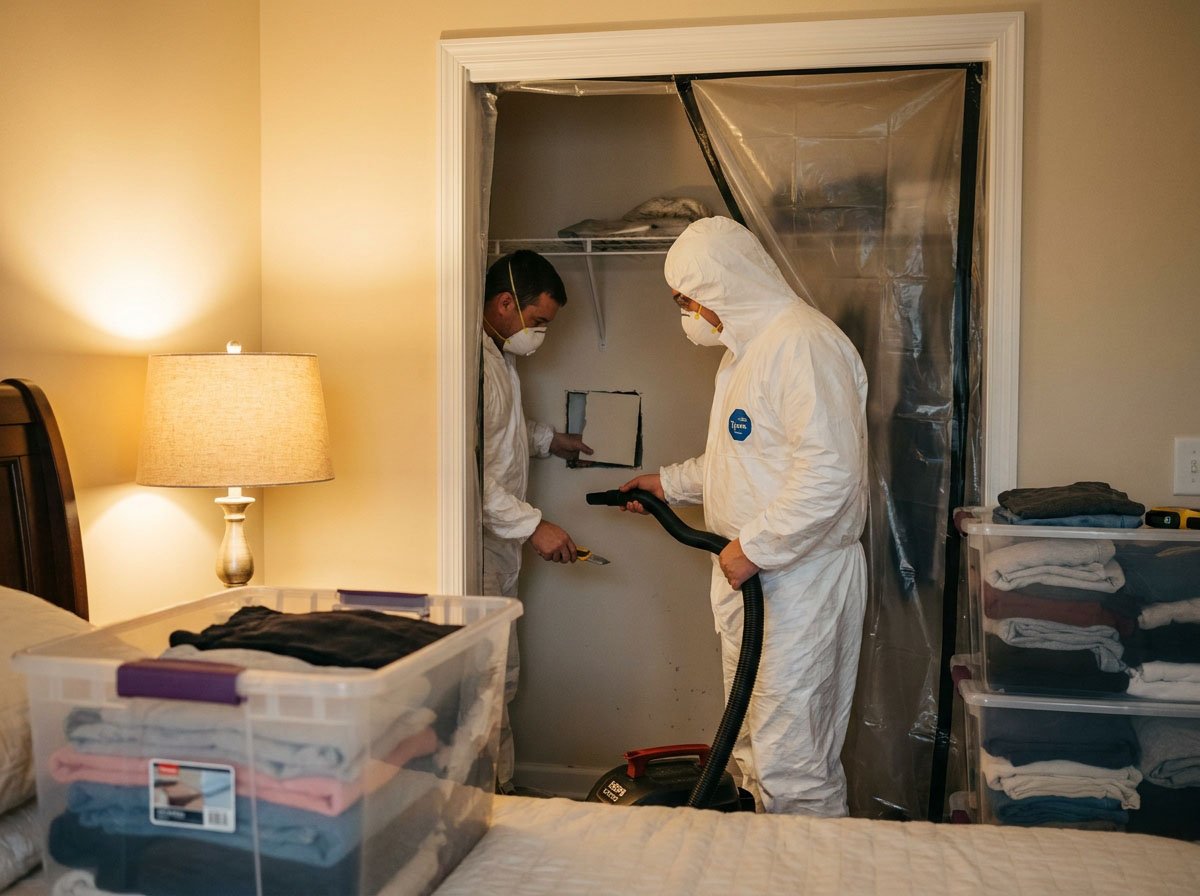
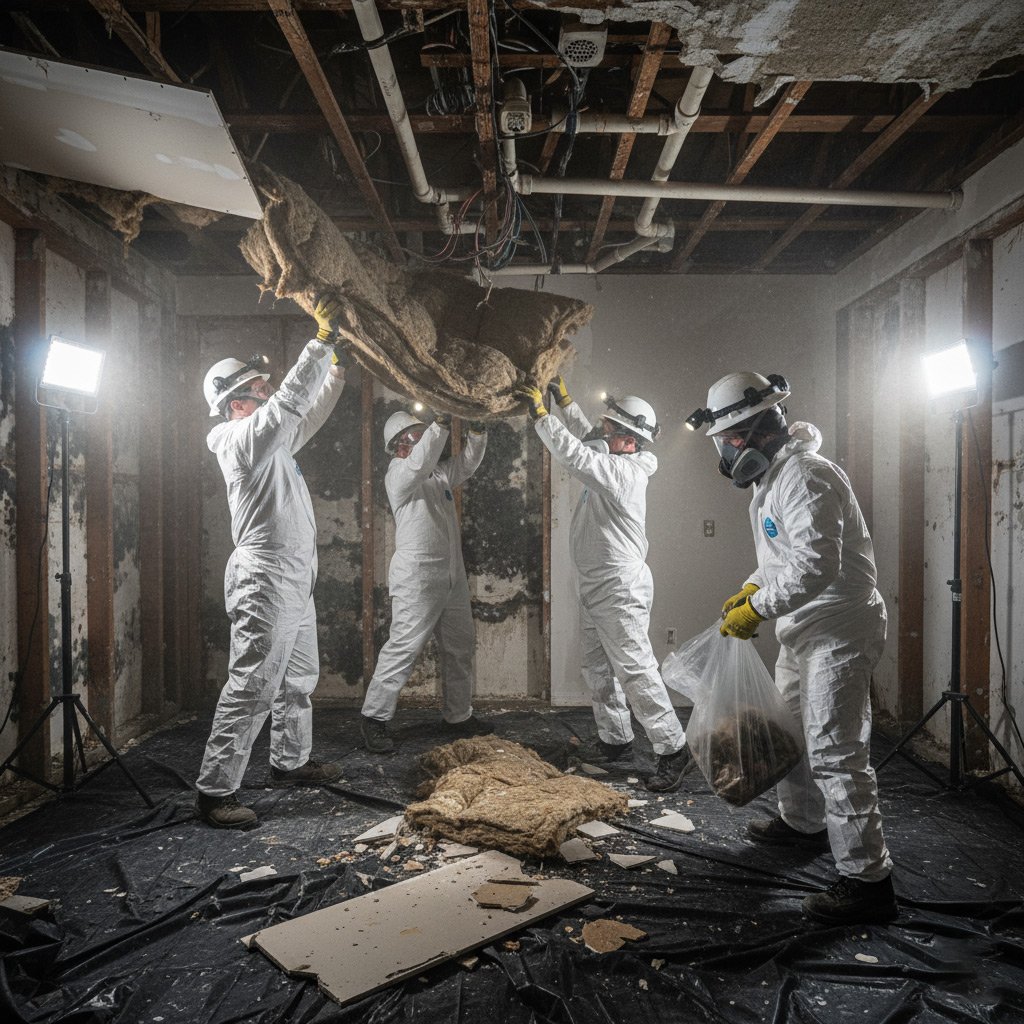
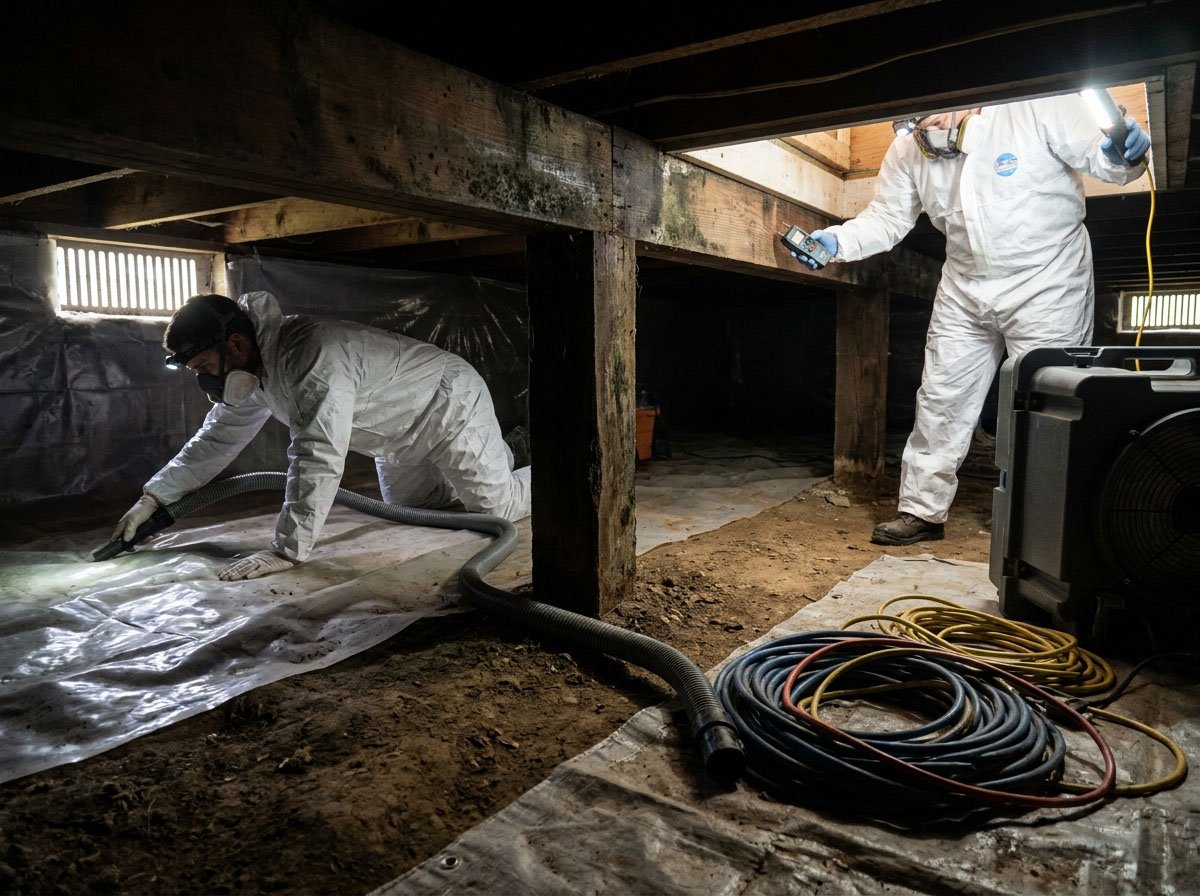
That water does not usually appear on the ceiling. It tracks down inside the exterior wall cavity, soaks insulation from the top, and shows up as a stain near the floor or as a smell in spring. By then it has been wet for months and the question is mold, not drying. Our mold remediation page covers that work.
Spring, The Lake And The Water Table
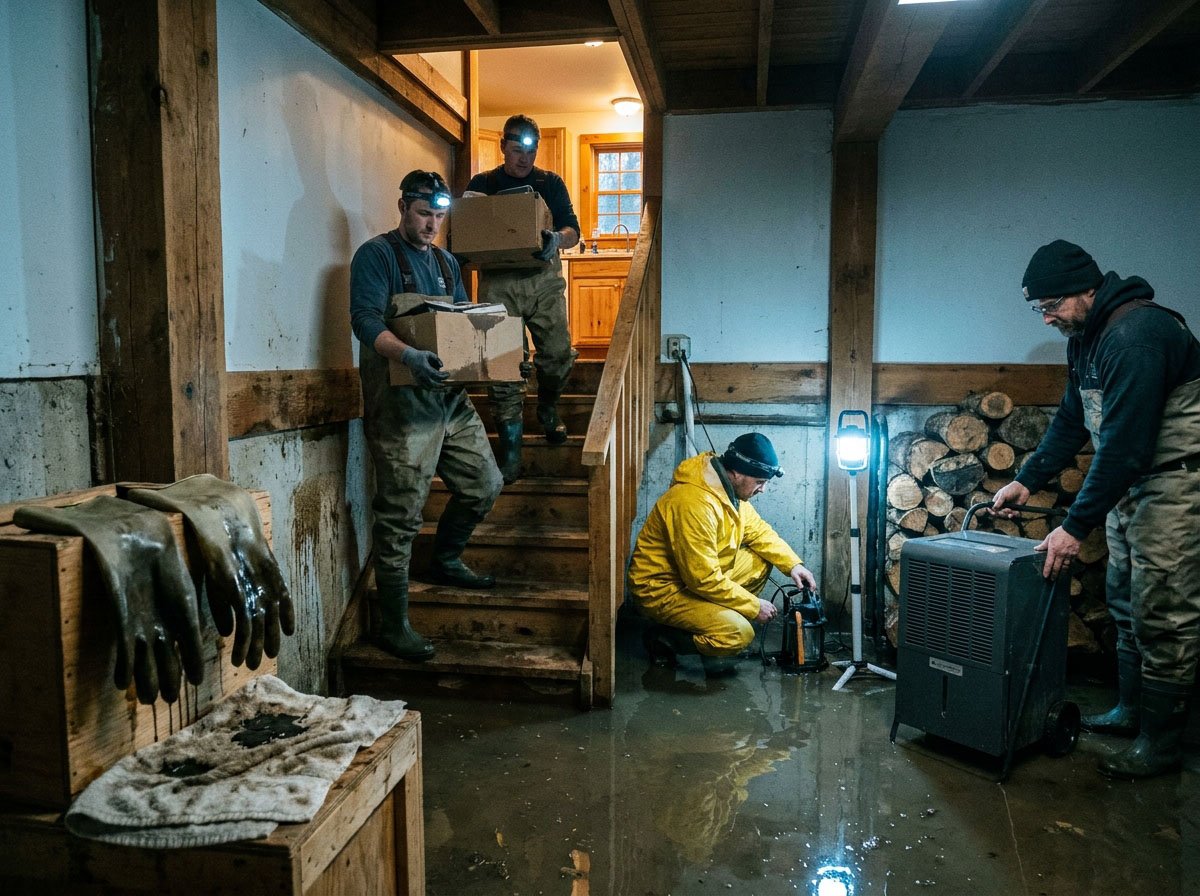
The West End borders the west basin of Lake Winona, which is a remnant of the Mississippi's former main channel. Like the rest of the city it sits on sand. During snowmelt the groundwater under these blocks rises and sump pumps that idled all year get their one real test.
Test yours before the thaw rather than during it. Pour a bucket into the pit and confirm it starts, runs and shuts off, and check that the discharge line outside is clear and not frozen at the outlet. A discharge line frozen solid means the pump runs and the water comes straight back in.
Response And Drying
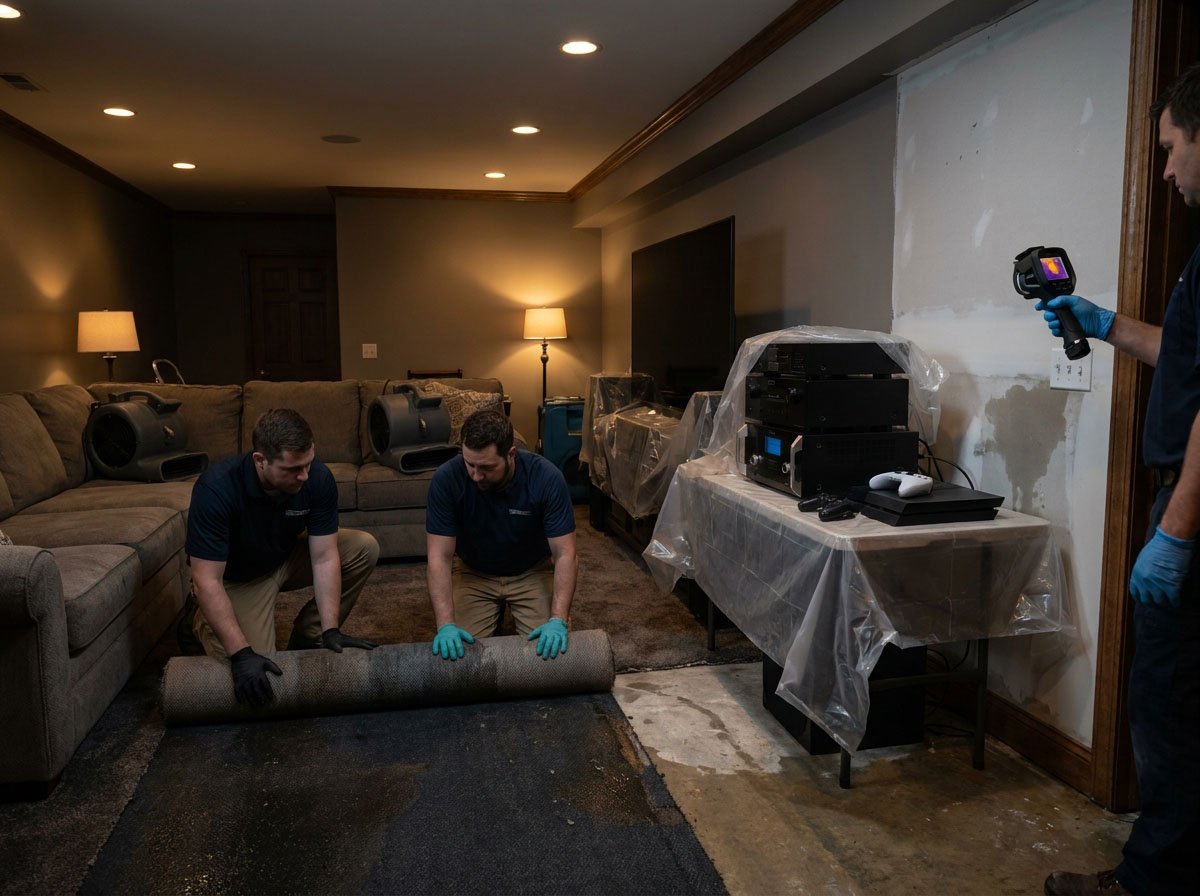
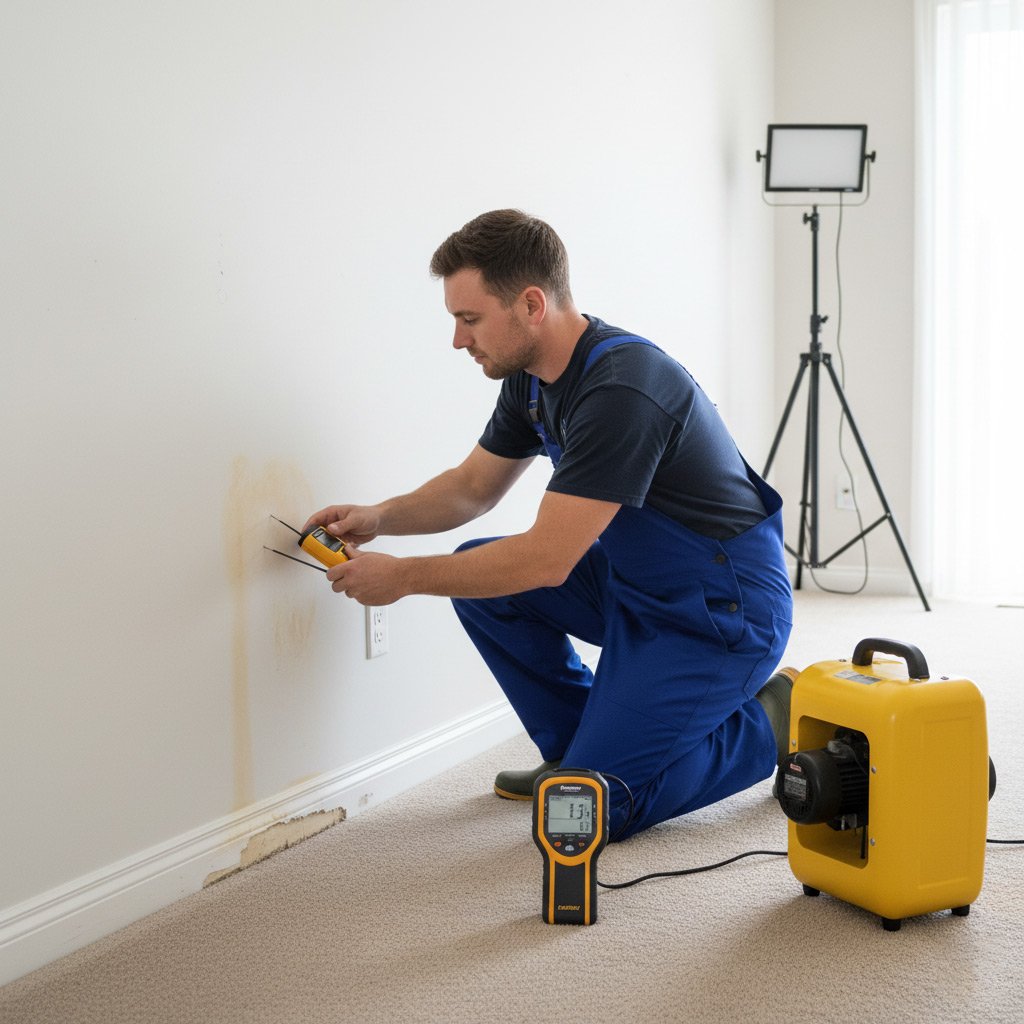
On arrival the contractor identifies the source, then meters well beyond the visible damage. Frozen line failures behave differently from groundwater: the water usually starts high and works down, so ceilings, wall cavities and the floor below all need mapping.
Extraction comes first, then containment and structural drying with equipment sized to the actual space. Daily readings are logged against a dry standard from an unaffected part of the house, and equipment stays until the numbers agree.
Call (507) 698-9249. If the line is still running, shut the main off before you dial.